
Single Edition Photographs
Held. In Perpetuity.
Held. In Perpetuity.
Available for acquisition: A single handheld vernacular photograph, together with a single large scale reassertion, forming a singular work. Transferred to one collector.
Acquire & steward.
one image, one owner
The Original
Handheld photograph. The only one that exists.
The Reassertion
Subtle retouching. Museum quality, large scale, framed archival print.
The Authentication
Verisart blockchain COA. Ownership verified forever.

When people ask me what equipment I use, I tell them -
my eyes.
unknown
available work.
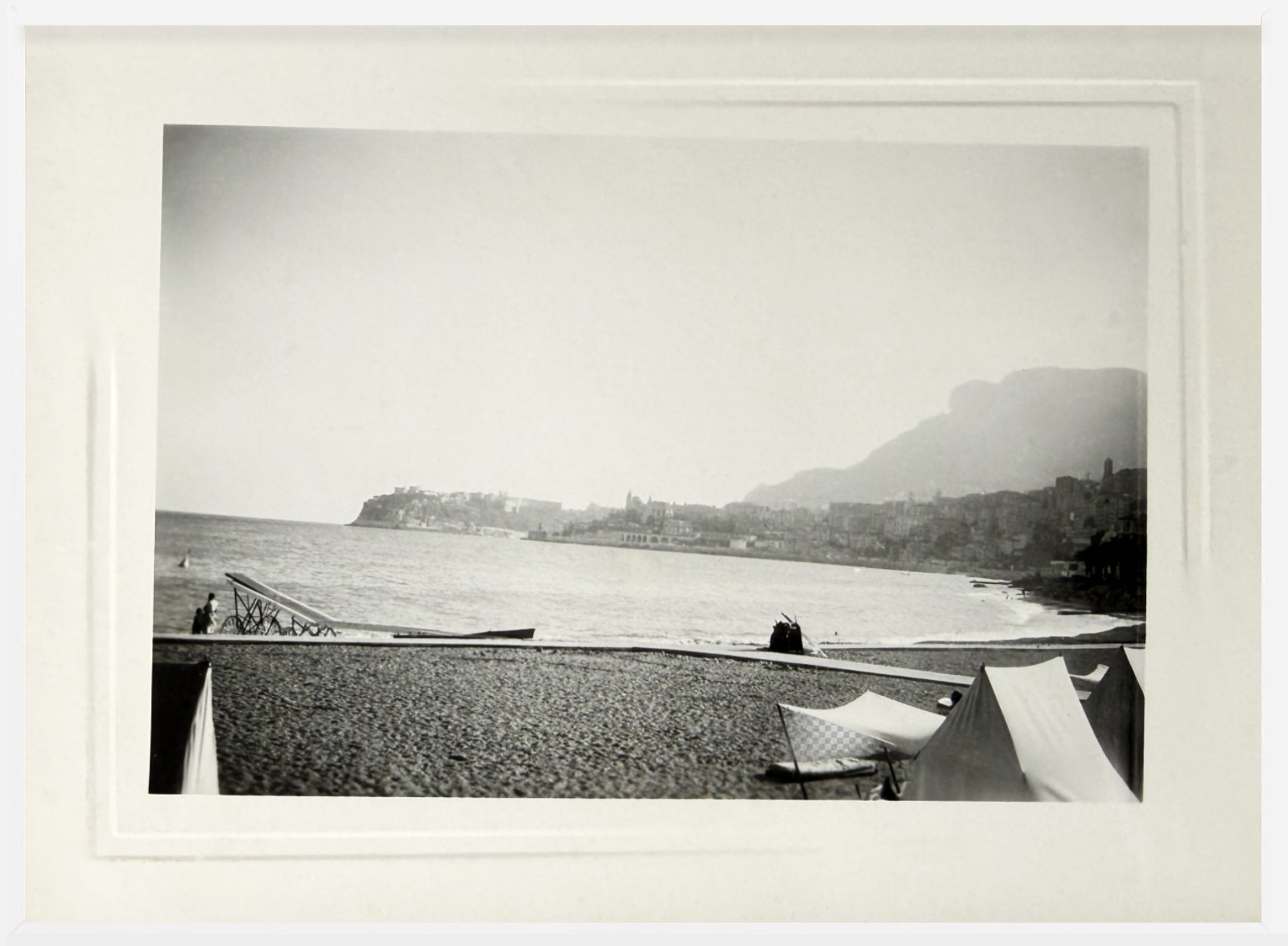
Overlooking the Grande Bleue, the Hotel Monte-Carlo Beach has embodied French seaside elegance since 1929. Nestled between Monaco and Roquebrune-Cap-Martin, this iconic hotel was originally designed as a palace inspired by ocean liners. it has stood the test of time without losing its soul. In the 50s and 60s, Monte-Carlo Beach was more than a destination, it was a state of mind—an era of salt-kissed skin and effortless glamour under the Riviera sun.
Image Order: Framed, Insitu, Original, Verso
Original Photograph
Photographer: Unknown
Location: Monte Carlo, Monaco
Captured: Unknown
Size: 3 1/8” x 4 1/4”
Printed on: Velox 216
Camera: Unknown
Verso: Monte Carlo & Monaco from Beach Club
Presentation: Custom box shipped separately
Contemporary Photograph
Size: 30” x 40
Positioning: Centered
Border: 2”
Paper: Hahnemühle 100% Photo Rag Baryta | Pure Cotton | 315 gsm
Moulding: Solid Wood Museum Shadowbox
Frame Face: 3/4”
Frame Color: White
Glazing: UV Acrylic
Presentation: Landscape
Authentication
Verisart COA
21 Founders | Initials embedded
Conversation? We’re human.
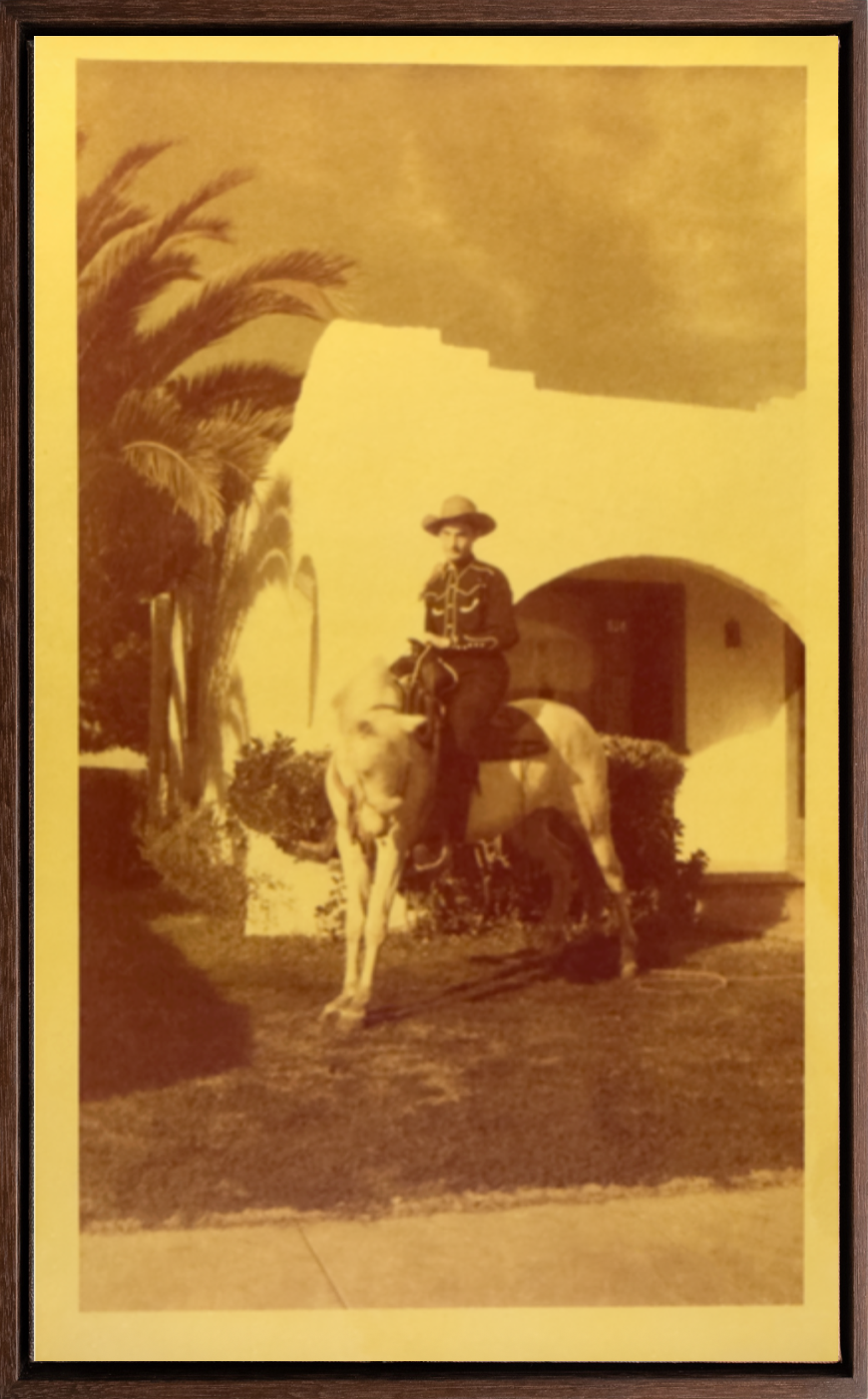
Rooted in ritual, discipline, and lineage, the Charro stands as one of the most enduring figures of Mexican identity—the horseman from the countryside, who lived and worked in the haciendas, performed all his tasks on horseback. Renowned for his superb horsemanship, for his skill in handling the lasso, and for his unique costume designed specially for horseback riding, the Charro dates back to the Mexican Revolution. This photograph likely dates from the early 20th century, a period when the Charro suit was widely worn by affluent individuals—formalizing its significance in Mexican culture.
Image Order: Framed, Insitu, Original, Verso
Original Photograph
Photographer: Unknown
Location: Unknown
Captured: February, 1947
Size: 3 1/4” x 5 3/8”
Printed on: Kodak Paper
Camera: Unknown
Verso: Kodak back print
Presentation: Custom box shipped separately
Contemporary Photograph
Size: 35” x 58”
Positioning: Centered
Border: Original
Paper: Hahnemühle 100% Photo Rag Baryta | Pure Cotton | 315 gsm
Frame: Solid Wood Museum Floater
Frame Face: 3/4”
Frame Color: Dark Walnut
Glazing: Archival laminate
Presentation: Portrait
Authentication
Verisart COA
21 Founders | Initials embedded
Conversation? We’re Human.
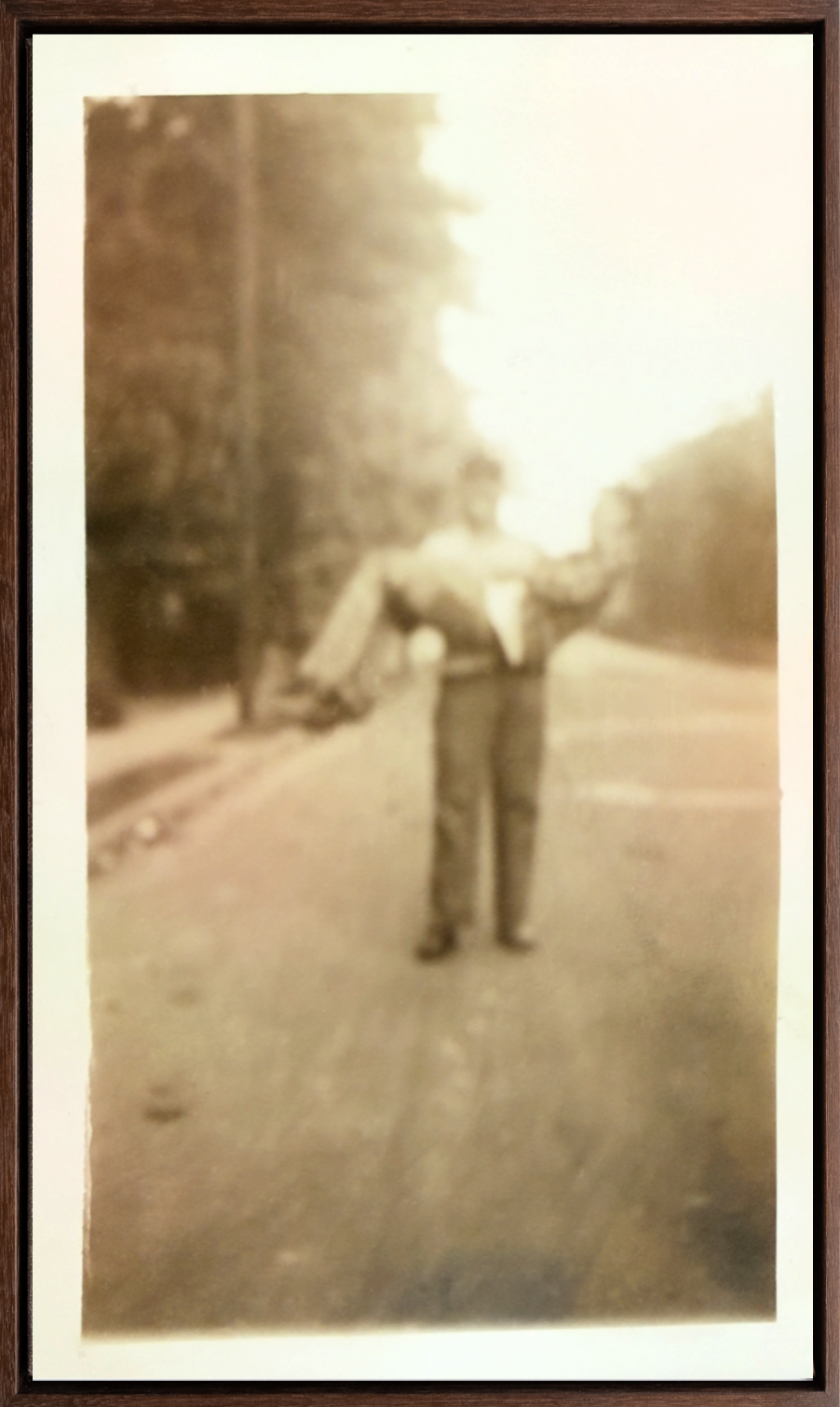
Two men—mysterious in not what’s revealed, but what’s withheld. Blur and over exposure brings an otherworldly dimension to the figures, appearing to simply ‘be there.’ While impossible to tell, the impression somehow suggests that these two are having a marvelous time—that a far more memorable experience has been captured, than if the beers had stayed in the cooler!
Image Order: Framed, Insitu, Original, Verso
Original Photograph
Photographer: Unknown
Location: Unknown
Captured: Unknown
Size: 2 3/4” x 4 5/8”
Printed on: Unknown
Camera: Unknown
Verso: A53
Presentation: Custom box shipped separately
Contemporary Photograph
Size: 35” x 60”
Positioning: Centered
Border: Original
Paper: Hahnemühle 100% Photo Rag Baryta | Pure Cotton | 315 gsm
Moulding: Solid Wood Museum Floater
Frame Face: 3/4”
Frame Color: Dark Walnut
Glazing: Archival Laminate
Presentation: Portrait
Authentication
Verisart COA
21 Founders | Initials embedded
Conversation? We’re Human.
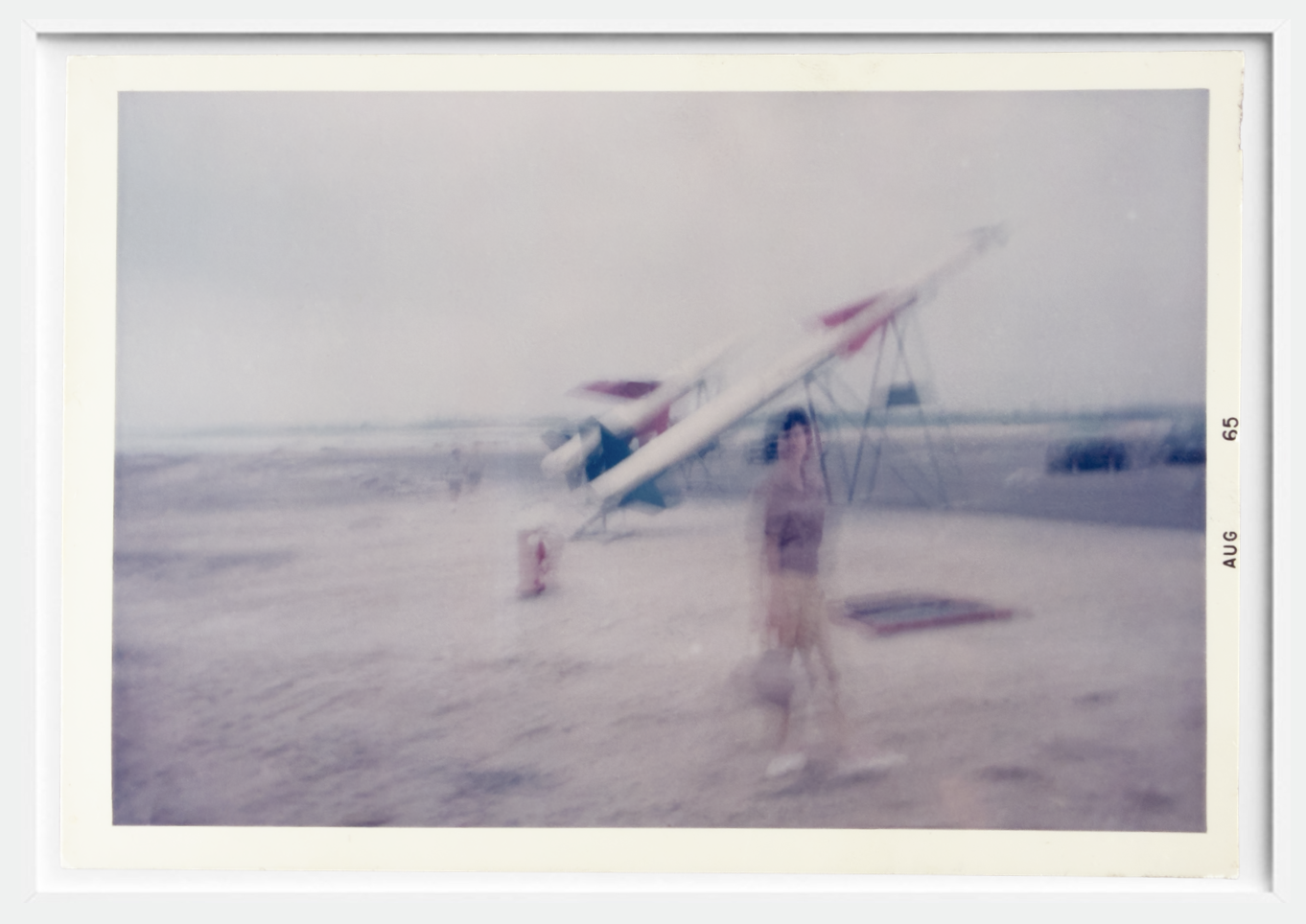
In 1965, the original and historic “rocket garden” at the Kennedy Space Center and Cape Canaveral Space Force Museum, began at the Air Force Space and Missile Museum. This is likely a very early image of the museum’s outdoor exhibits—significant, in that 1965 was a pivotal year for NASA and the U.S. space program — arguably the year when the Moon landing became technically plausible. The month that this image was captured, Gordon Cooper & Pete Conrad completed an 8-day mission, for the first time using fuel cells for onboard power and demonstrating that humans could remain healthy for the duration of a Moon mission. Four years later, Neil Armstrong and Buzz Aldrin stepped foot on the moon.
Image Order: Framed, Insitu, Original, Verso
Original Photograph
Photographer: Unknown
Location: Unknown
Captured: August, 1965
Size: 3 1/2” x 5”
Printed on: Kodak Paper
Camera: Unknown
Verso: Kodak back print
Presentation: Custom box shipped separately
Contemporary Photograph
Size: 40” x 58”
Positioning: Centered
Border: 2”
Paper: Hahnemühle100% Photo Rag Baryta | Pure Cotton | 315 gsm
Moulding: Solid Wood Museum Shadowbox
Frame Face: 3/4”
Frame Color: White
Glazing: UV Acrylic
Presentation: Landscape
Authentication
Verisart COA
21 Founders | Initials embedded
Conversation? We’re Human.
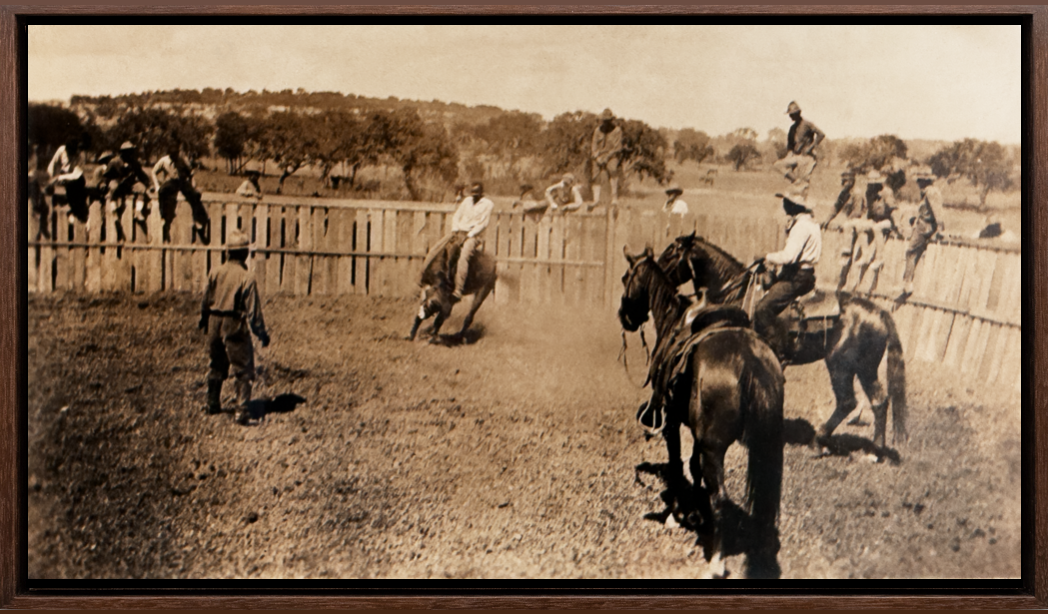
Rodeo day! Informal competition was integral to the life of the working cowboy and served as the primary bridge between daily ranch work and public entertainment. Black cowboys were pivotal in settling the American West, making up an estimated 1 in 4 cowhands (roughly 6,000-8,000) during the late 19th century cattle boom. Typically former slaves, these men had skills in cattle handling and headed West at the end of the Civil War. Despite widespread erasure from popular media, Black cowboys—including figures like Bill Pickett and Nat Love—played a crucial role in shaping the Texas cattle industry and westward expansion.
Image Order: Framed, Insitu, Original, Verso
Original Photograph
Photographer: Unknown
Location: Tyndall, South Dakota
Captured: Unknown
Size: 2 5/8” x 4 3/8”
Printed on: Unknown
Camera: Unknown
Verso: Tyndall Photo Co. Stamp
Presentation: Custom box shipped separately
Contemporary Photograph
Size: 30” x 53”
Positioning: Centered
Border: Bleed
Paper: Paper: Hahnemühle 100% Photo Rag Baryta | Pure Cotton | 315 gsm
Moulding: Solid Wood Museum Floater
Frame Face: 3/4”
Frame Color: Dark Walnut
Glazing: Archival Laminate
Presentation: Landscape
Authentication
Verisart COA
21 Founders | Initials embedded
Conversation? We’re Human.
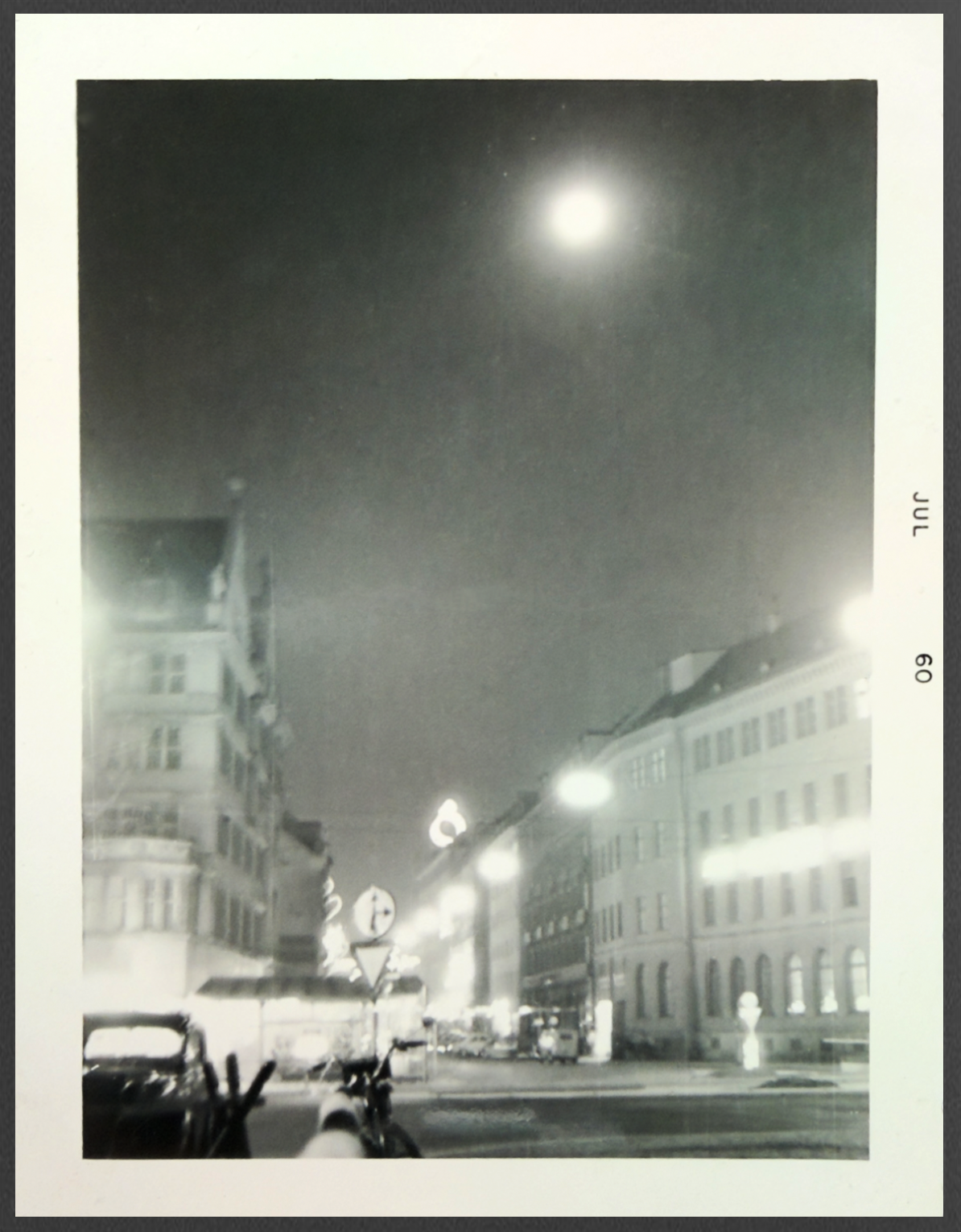
In July 1960, Europe was marked by the escalating Congo Crisis, which prompted a swift Belgian military intervention, while the Soviet Union won the inaugural UEFA European Football Championship in Paris. Additionally, the month saw significant political unrest in Italy with the resignation of the Tambroni government, alongside the start of the 47th edition of the Tour de France cycling race. Here, night falls under a full moon.
Image Order: Framed, Insitu, Original, Verso
Original Photograph
Photographer: Unknown
Location: Unknown
Captured: July 1960
Size: 3 1/4” x 4 1/4”
Printed on: KODAK VELOX PAPER
Camera: Unknown
Verso: Kodak Backprint
Presentation: Custom box shipped separately
Contemporary Photograph
Size: 30” x 38”
Positioning: Centered
Border: 2”
Paper: Paper: Hahnemühle 100% Photo Rag Baryta | Pure Cotton | 315 gsm
Moulding: Solid Wood Museum Shadowbox
Frame Face: 3/4”
Frame Color: Black
Glazing: UV Acrylic
Presentation: Landscape
Authentication
Verisart COA
21 Founders | Initials embedded
Conversation? We’re Human.
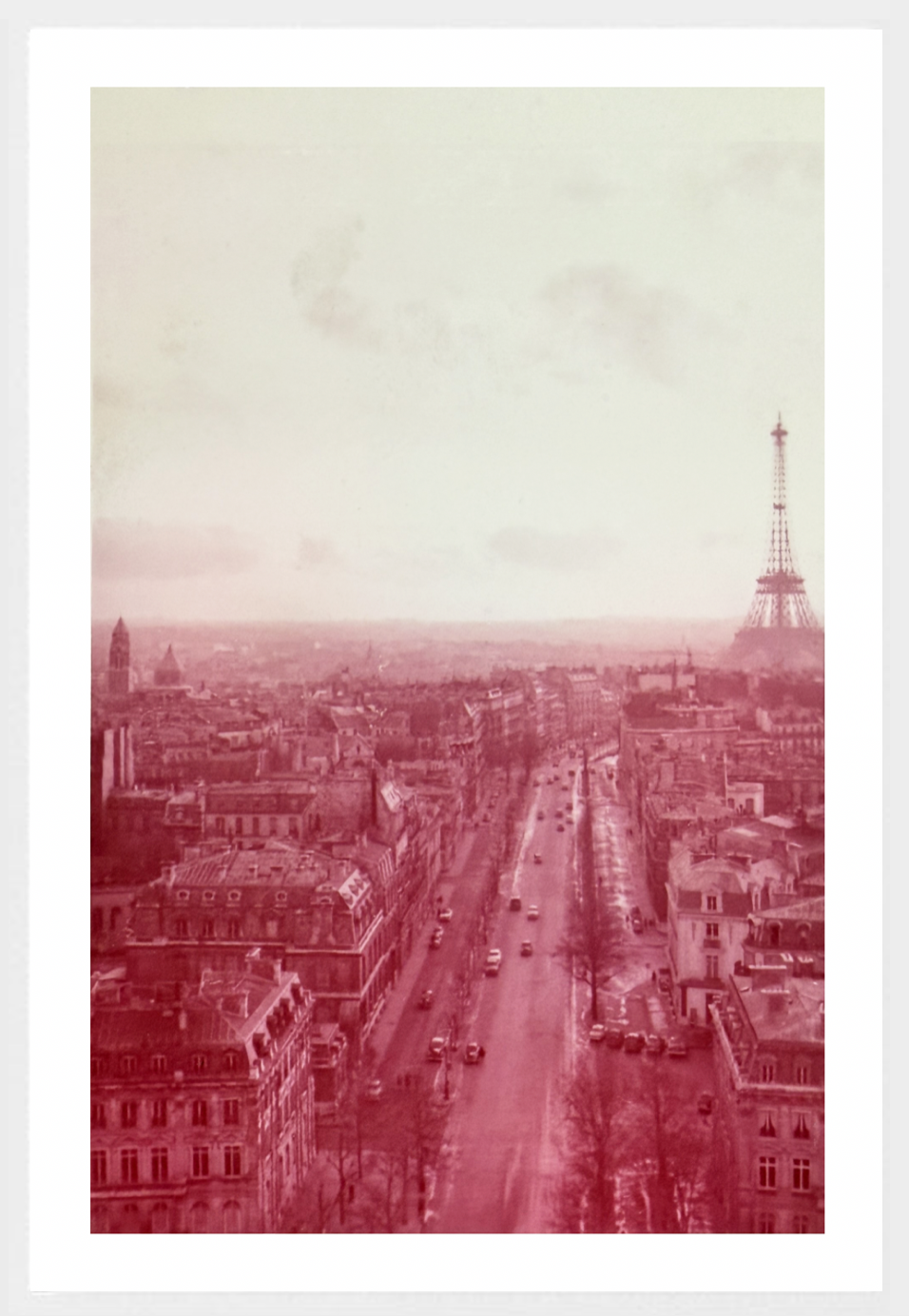
Following 30 years of construction, the Arc de Triomphe was inaugurated on July 29, 1836. By comparison, The Eiffel Tower was completed in two years, on March 31, 1889, as the centerpiece of the 1889 World’s Fair. Shot from the observation deck, this image connects two of the most famous landmarks in Paris, a brilliant composition that hugs the Eiffel Tower to the far right edge, while choosing the significance and arc of the Ave d'Iéna as the focal point. In 1956/57, Paris was dominated by the Suez Crisis, the intensification of the Algerian War, and the start of European integration marked by The Paris Conference, addressing major issues regarding the formation of the European Economic Community (EEC).
Image Order: Original, Verso, Framed, Insitu
Original Photograph
Photographer: Unknown
Location: Paris, France
Captured: 1956/1957
Size: 3 1/2” x 5”
Printed on: Kodacolor
Camera: Unknown
Verso: Kodak back print
Presentation: Custom Folder shipped separately
Contemporary Photograph
Size: 40” x 57”
Positioning: Centered
Border: 2”
Paper: Hahnemühle 100% Photo Rag Baryta | Pure Cotton | 315 gsm
Moulding: Solid Wood Museum Shadowbox
Frame Face: 3/4”
Frame Color: White
Glazing: UV Acrylic
Presentation: Portrait
Authentication
Verisart COA
21 Founders | Initials embedded
Conversation? We’re Human.
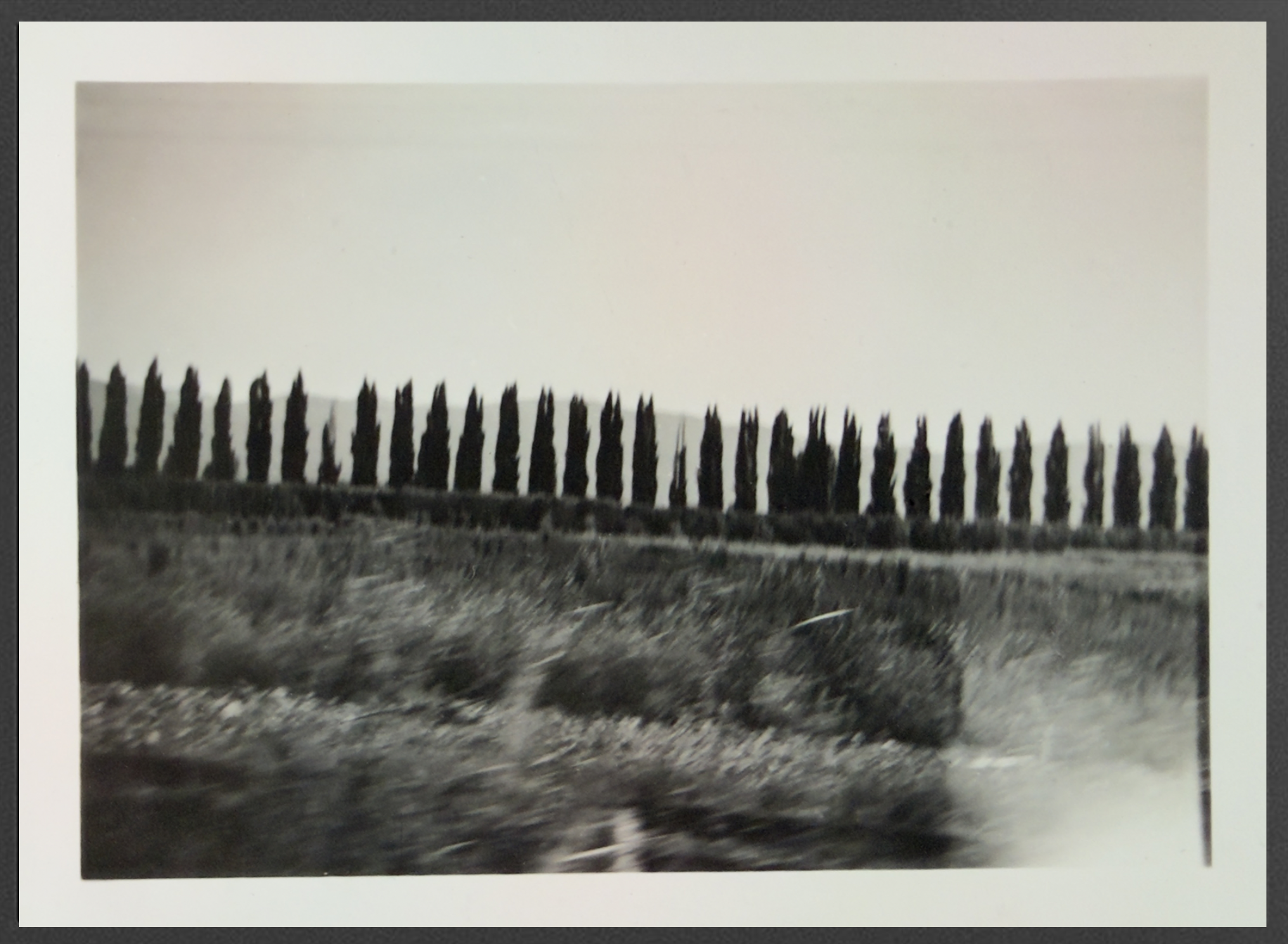
Rows of Italian cypress trees are often associated with the landscapes of Tuscany, a quintessential symbol of the Tuscan countryside, lining roads and marking property boundaries. Cypress trees have been planted for centuries and are sometimes seen as symbols of immortality or mourning due to their resilience and upward growth. While this image checks all the boxes for classic geometric composition: linear paths, recognizable geometric shapes, symmetry, repetition of patterns and the strategic use of space—its true spirit is in the movement, light and texture.
Image Order: Framed, Insitu, Original, Verso
Original Photograph
Photographer: Unknown
Location: Unknown
Captured: Unknown
Size: 2 1/2” x 3 1/2”
Printed on: Unknown
Camera: Unknown
Verso: 10
Presentation: Custom box shipped separately
Contemporary Photograph
Size: 40” x 55”
Positioning: Centered
Border: 2”
Paper: Paper: Hahnemühle 100% Photo Rag Baryta | Pure Cotton | 315 gsm
Moulding: Solid Wood Museum Shadowbox
Frame Face: 3/4”
Frame Color: Black
Glazing: UV Acrylic
Presentation: Landscape
Authentication
Verisart COA
21 Founders | Initials embedded
Conversation? We’re Human.
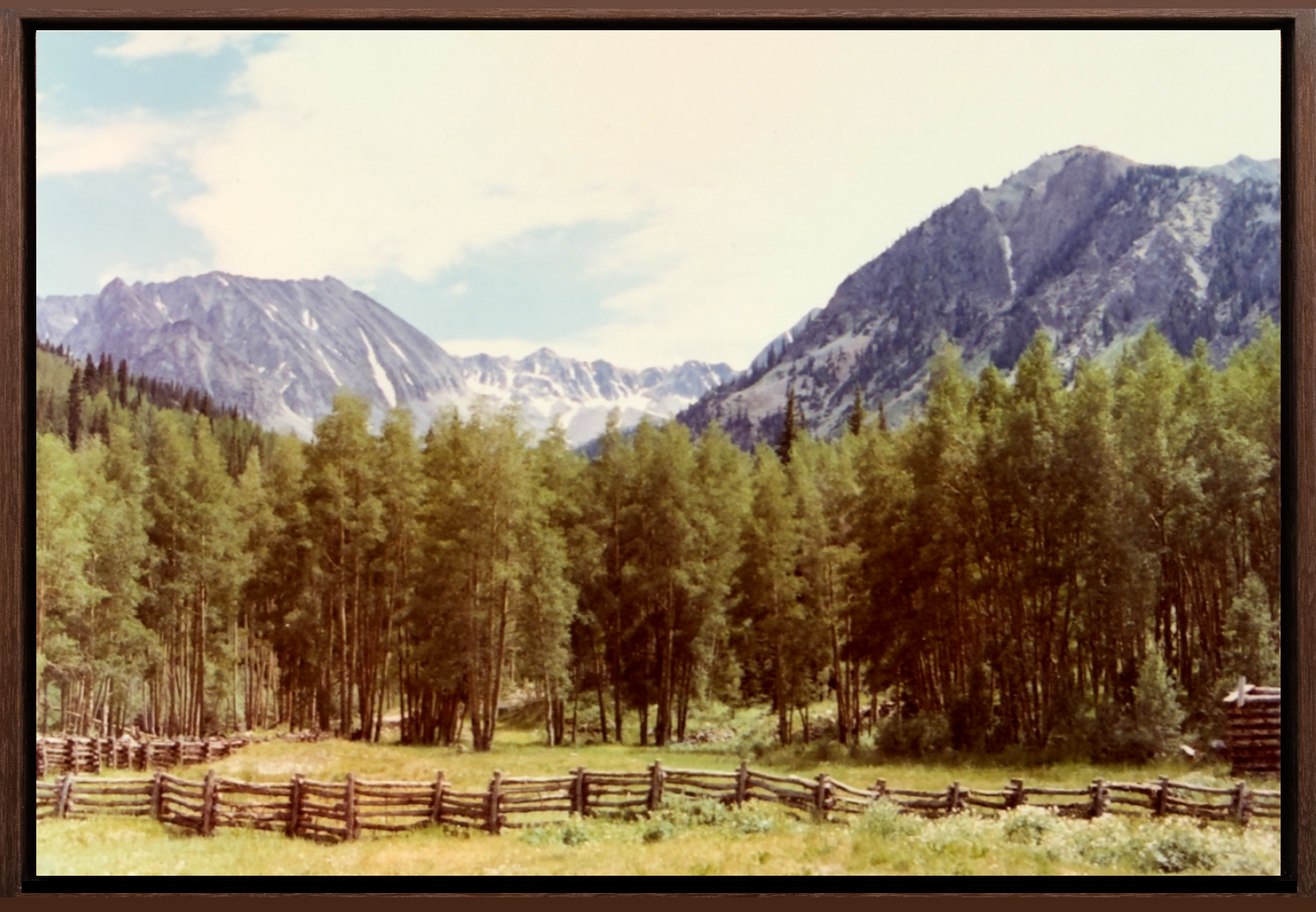
Just up Castle Creek Road from Aspen, Colorado is the extinct silver mining town of Ashcroft, at an elevation of 9,521 feet in the Elk Mountains of Pitkin County, originally founded as Castle Forks City in the spring of 1880. On May 12, 1975, Ashcroft was listed on the National Register of Historic Places, about the time this photograph was taken. This vantage point from Castle Creek Road toward Castle Peak (14,279’) and Conundrum Peak (14,040’) shows one of the original ranch outbuildings and snake rail fence, an historically significant, zigzag-patterned, split-wood structure used in North America since the 1600s.
Image Order: Framed, Insitu, Original, Verso
Original Photograph
Photographer: Unknown
Location: Unknown
Captured: Unknown
Size: 3 1/2” x 5”
Printed on: Kodak Paper
Camera: Unknown
Verso: Kodak back print
Presentation: Custom box shipped separately
Contemporary Photograph
Size: 40” x 57.5”
Positioning: Centered
Border: Bleed
Paper: Paper: Hahnemühle 100% Photo Rag Baryta | Pure Cotton | 315 gsm
Moulding: Solid Wood Museum Floater
Frame Face: 3/4”
Frame Color: Dark Walnut
Glazing: Archival Laminate
Presentation: Landscape
Authentication
Verisart COA
21 Founders | Initials embedded
Conversation? We’re Human.
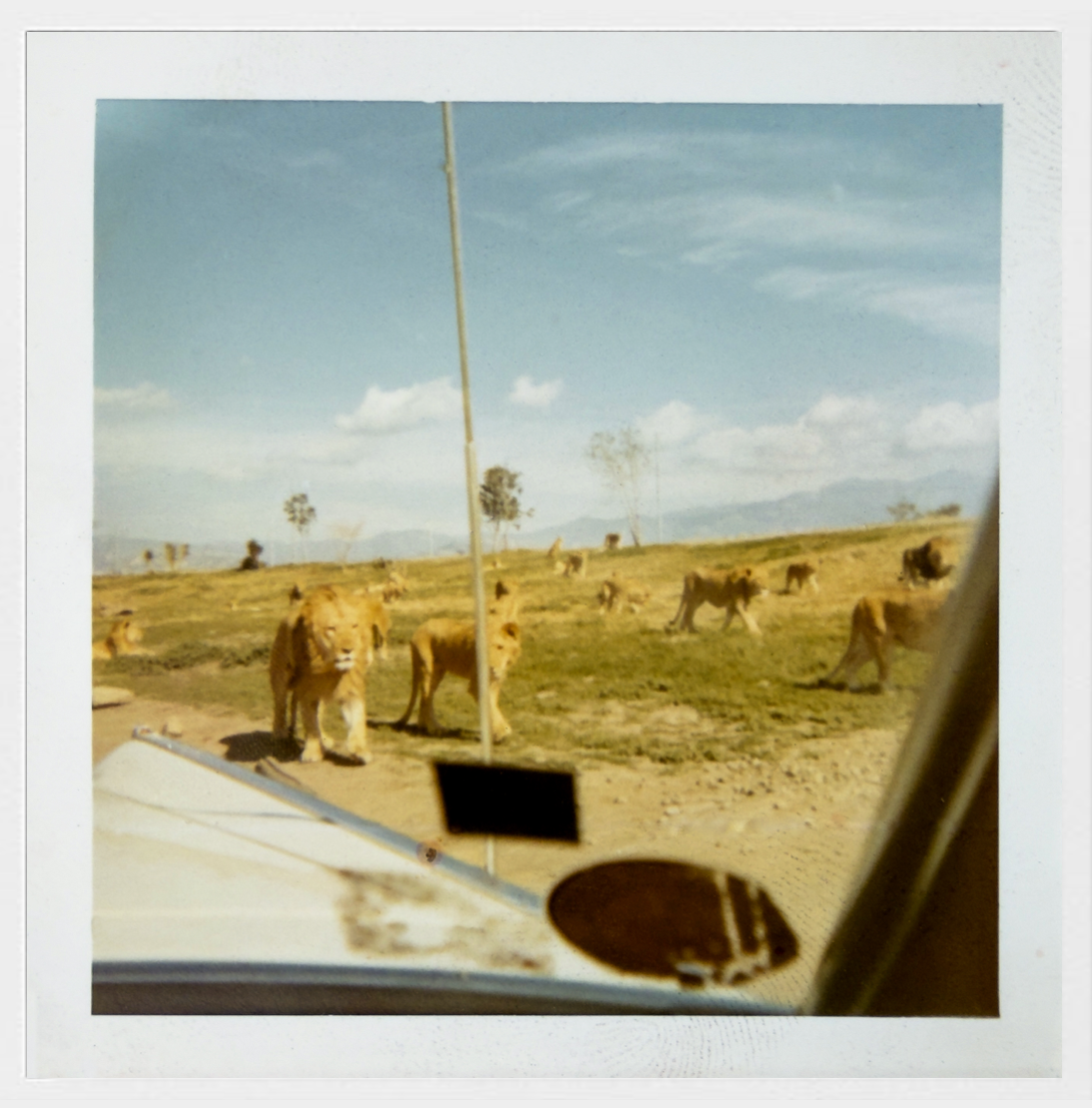
Likely captured at Lion Country Safari, a pioneering drive-through “safari” experience where visitors could drive their own vehicles through open animal enclosures. The park opened in Irvine, California in 1970 and closed in 1984 following a series of animal escapes. The evolution of animal parks and wildlife attractions helped pioneer the cageless safari concept — immersive, drive-through wildlife experiences, that challenged the practice of Zoo “confinement.” Shot over the passenger side of the car, the windshield stickers are reassurance of the existence of a glass barrier between a pride of lions and red meat.
Image Order: Framed, Insitu, Original, Verso
Original Photograph
Photographer: Unknown
Location: Unknown (possibly California’s Lion Country Safari)
Captured: February, 1972
Size: 2 1/2” x 2 1/2”
Printed on: AGFA Paper
Camera: Unknown
Verso: Feb-72
Presentation: Custom box shipped separately
Contemporary Photograph
Size: 40” x 40”
Positioning: Centered
Border: 2”
Paper: Paper: Hahnemühle 100% Photo Rag Baryta | Pure Cotton | 315 gsm
Moulding: Solid Wood Museum Shadowbox
Frame Face: 3/4”
Frame Color: White
Glazing: UV Acrylic
Presentation: Landscape
Authentication
Verisart COA
21 Founders | Initials embedded
Conversation? We’re Human.
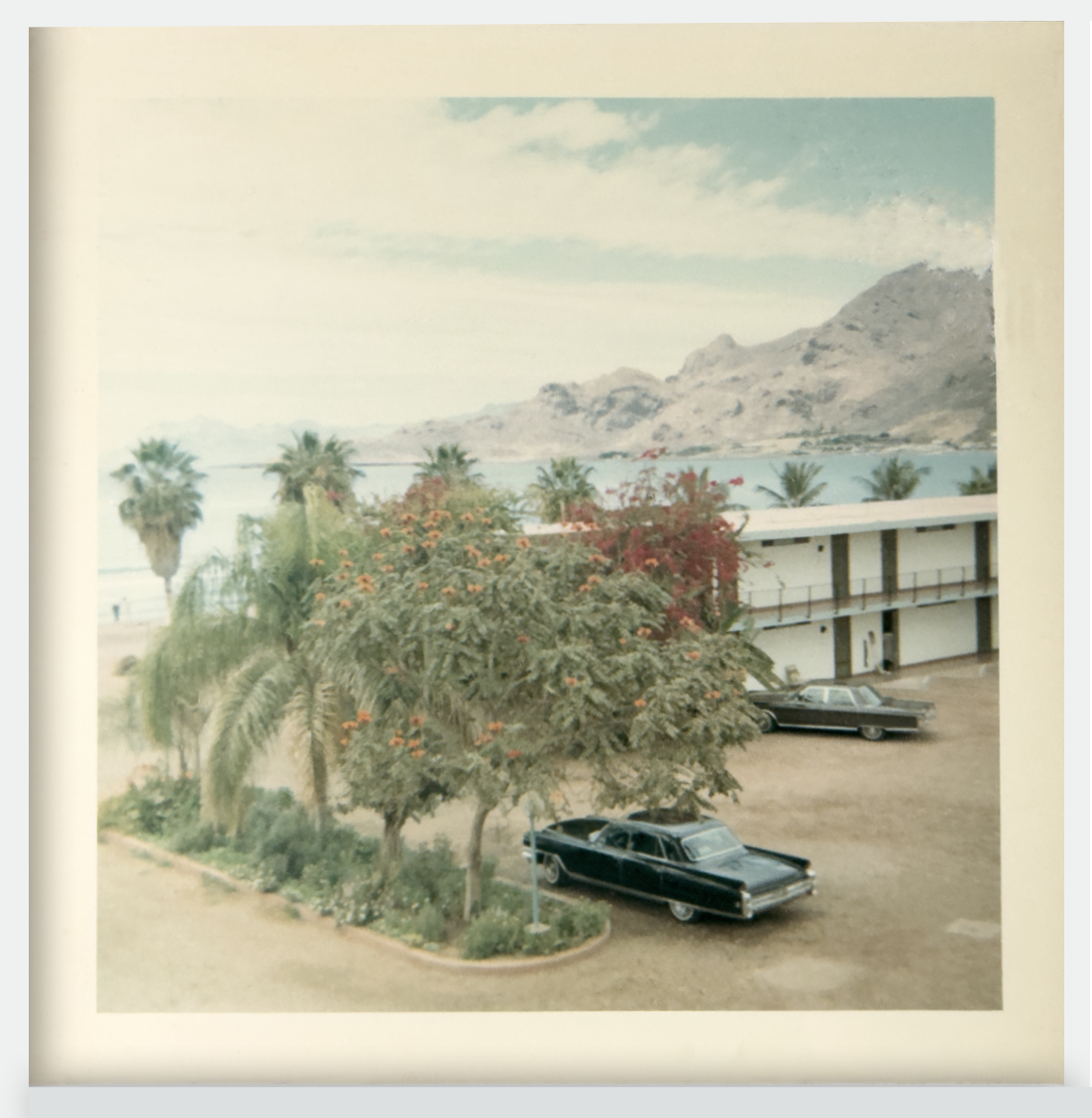
1963 Cadillac Fleetwood Sixty Special. Black. Two of 'em. At a motel on the beach. Hmmm.
Image Order: Framed, Insitu, Original, Verso
Original Photograph
Photographer: Unknown
Location: Unknown
Captured: Unknown
Size: 3 1/2” x 3 1/2”
Printed on: Kodak Paper
Camera: Unknown
Verso: Kodak back print
Presentation: Custom box shipped separately
Contemporary Photograph
Size: 30” x 30”
Positioning: Centered
Border: 2”
Paper: Paper: Hahnemühle 100% Photo Rag Baryta | Pure Cotton | 315 gsm
Moulding: Solid Wood Museum Shadowbox
Frame Face: 3/4”
Frame Color: White
Glazing: UV Acrylic
Presentation: Landscape
Authentication
Verisart COA
21 Founders | Initials embedded
Conversation? We’re Human.
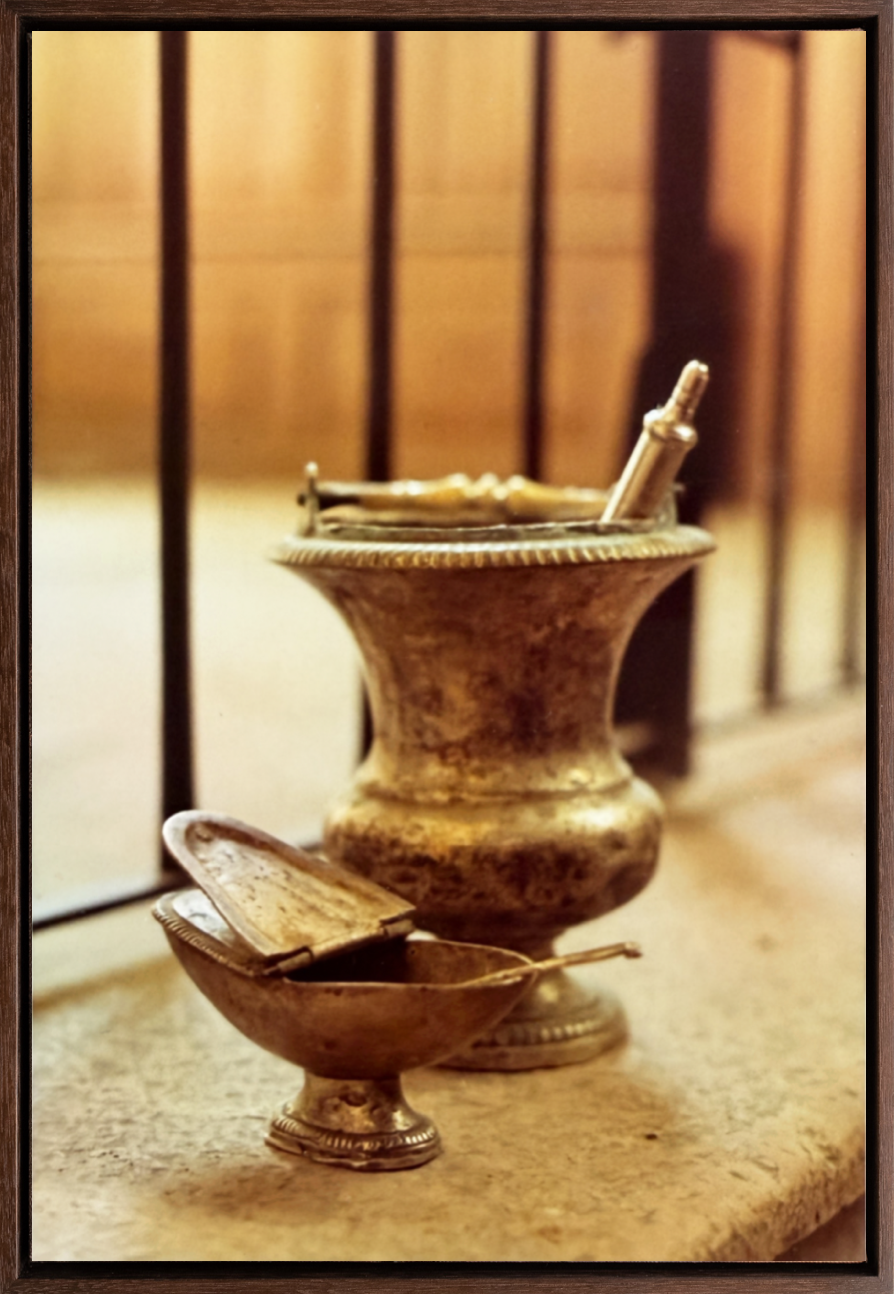
The large vessel is a situla, an ancient, typically elaborately decorated, bucket-shaped vessel, typically crafted from bronze, pottery, or ivory, often featuring a handle at the top. Derived from the Latin word for "bucket" or "pail," these vessels are characteristic of Iron Age European and Etruscan cultures (7th–4th century BC) and were commonly used as luxury items at feasts, as funerary urns to hold ashes, or as ritual libation vessels. The smaller vessel is a vintage ecclesiastical liturgical incense boat, used in religious ceremonies to hold incense granules, which are added to a censer (thurible) using the small accompanying spoon.
Image Order: Framed, Insitu, Original, Verso
Original Photograph
Photographer: Unknown
Location: Unknown
Captured: December, 1976
Size: 3 1/2” x 5”
Printed on: Kodak paoer
Camera: Unknown
Verso: Kodak back print
Presentation: Custom box shipped separately
Contemporary Photograph
Size: 30” x 43”
Positioning: Centered
Border: Bleed
Paper: Paper: Hahnemühle 100% Photo Rag Baryta | Pure Cotton | 315 gsm
Moulding: Solid Wood Museum Floater
Frame Face: 3/4”
Frame Color: Black
Glazing: Archival Laminate
Presentation: Landscape
Authentication
Verisart COA
21 Founders | Initials embedded
Conversation? We’re Human.
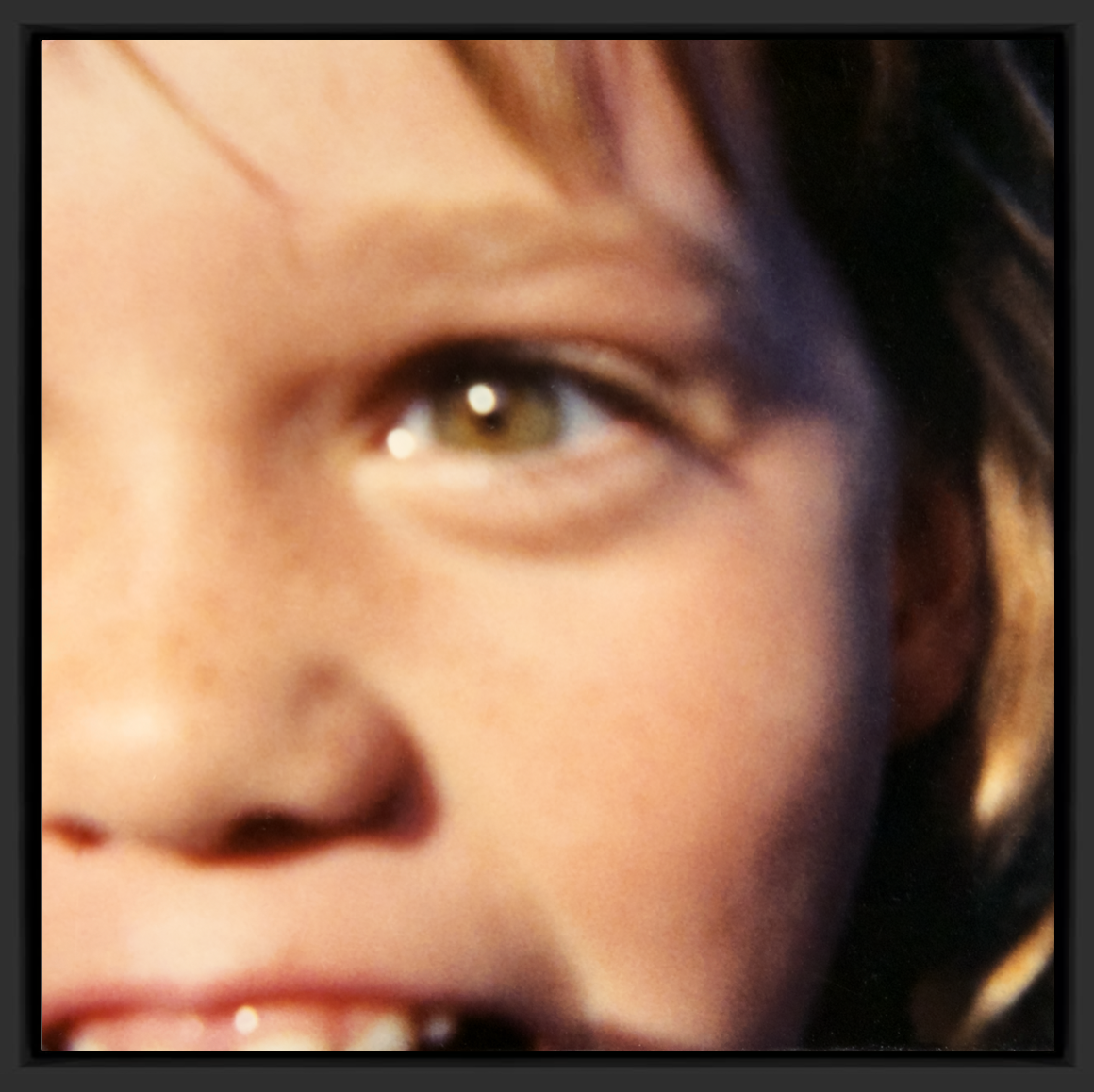
Likely an unintentional capture, or perhaps a quick snap from a sibling—brilliant in both ambiguity and account — exactly how one sibling might view the other! As super close-up portraits go, Bruce Gilden’s iconic series “Face” may come to mind, or the photorealism paintings of Chuck Close. Children always seem to punctuate a space, and this Child certainly does. Draws you in and carries you away.
Image Order: Framed, Insitu, Original, Verso
Original Photograph
Photographer: Unknown
Location: Unknown
Captured: Unknown
Size: 3 1/2” x 4 3/8” (Cropped in the reassertion to maximize visual impact)
Printed on: Kodak Royal Paper
Camera: Unknown
Verso: Kodak back print
Presentation: Custom box shipped separately
Contemporary Photograph
Size: 60” x 60”
Positioning: Centered
Border: Bleed
Paper: Hahnemühle 100% Photo Rag Baryta | Pure Cotton | 315 gsm
Moulding: Solid Wood Museum Shadowbox
Frame Face: 3/4”
Frame Color: Black
Glazing: Archival Laminate
Presentation: Portrait
Authentication
Verisart COA
21 Founders | Initials embedded
Conversation? We’re Human.
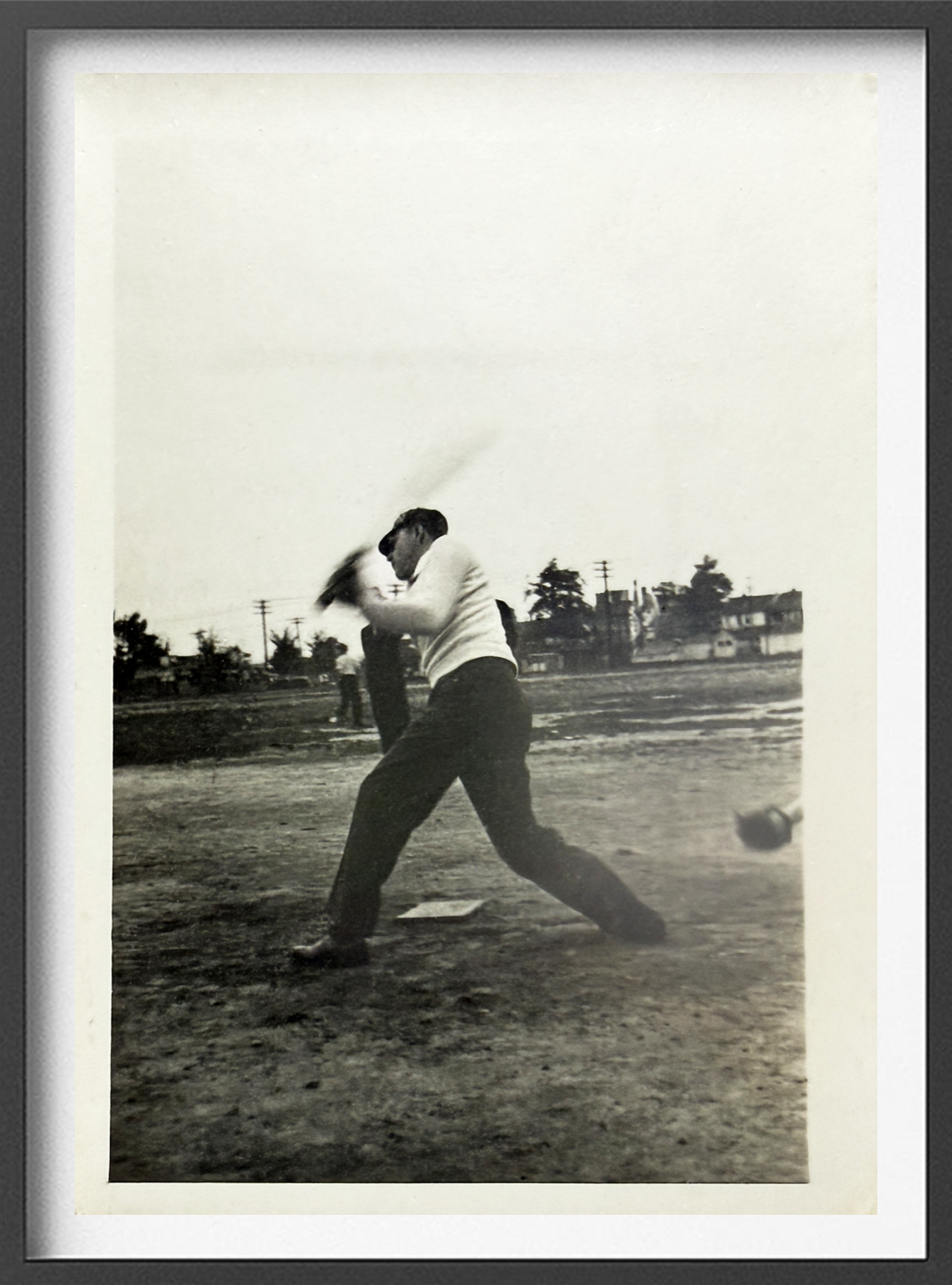
Sandlot and neighborhood baseball was the defining recreational institution of mid-20th century American life. Every neighborhood had a vacant lot that organically became a gathering place and baseball was overwhelmingly the dominant sport in American culture during this period, called "the national pastime" with genuine sincerity. The games were intergenerational, everyone played together—a social infrastructure as it were, in ways we've largely lost, building community bonds across economic lines. The fact that someone brought a camera to this informal game is itself significant. Film and processing weren't cheap. This suggests the moment felt worth preserving — either the player was particularly good, this was a recurring beloved tradition, or someone simply wanted to capture ordinary joy. That impulse makes it a quietly moving document of everyday American life.
Image Order: Framed, Insitu, Original, Verso
Original Photograph
Photographer: Unknown
Location: Unknown
Captured: Unknown
Size: 2 1/2” x 3 1/2
Printed on: Unknown
Camera: Unknown
Verso: NA
Presentation: Custom Folder shipped separately
Contemporary Photograph
Size: 30” x 43”
Positioning: Centered
Border: 2”
Paper: Paper: Hahnemühle 100% Photo Rag Baryta | Pure Cotton | 315 gsm
Moulding: Solid Wood Museum Shadowbox
Frame Face: 3/4”
Frame Color: Black
Glazing: UV Acrylic
Presentation: Portrait
Authentication
Verisart COA
21 Founders | Initials embedded
Conversation? We’re Human.
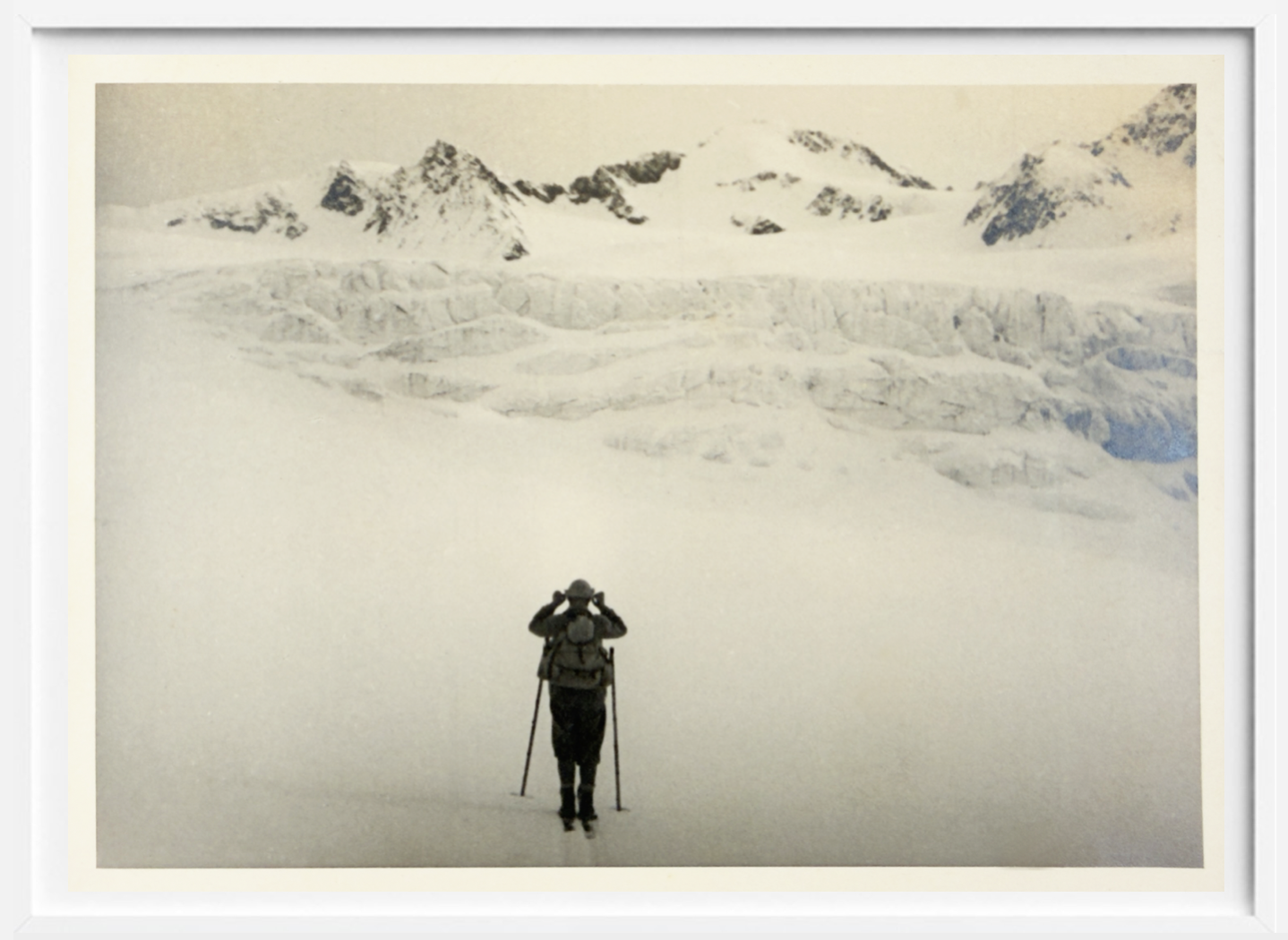
AI Translaton - German to English
(Ötztaler Gletscher)
**Grosse Nennaflinke im
Morgenlicht. Eine 200–250 m
hohe Eismandl.
im Hintergrund, Nennafspitze +
Bachkogel.**
(“Eismandl” = “little ice man / ice figure,” a common Alpine term for a tall ice tower or serac.)
Translation (English)
(Ötztal Glacier)
**Large Nennaflinke in the
morning light. A 200–250 m
high ice figure.
In the background, Nennafspitze
and Bachkogel.**
Image Order: Framed, Insitu, Original, Verso
Original Photograph
Photographer: Unknown
Location: Ötztal Glacier?
Captured: Unknown
Size: 3 5/16” x 4 9/16”
Printed on: Agfa Brovira
Camera: Unknown
Verso: Detail in German
Presentation: Custom box shipped separately
Contemporary Photograph
Size: 40” x 55”
Positioning: Centered
Border: 2”
Paper: Hahnemühle 100% Photo Rag Baryta | Pure Cotton | 315 gsm
Moulding: Solid Wood Museum Shadowbox
Frame Face: 3/4”
Frame Color: White
Glazing: UV Acrylic
Presentation: Landscape
Authentication
Verisart COA
21 Founders | Initials embedded
Conversation? We’re Human.
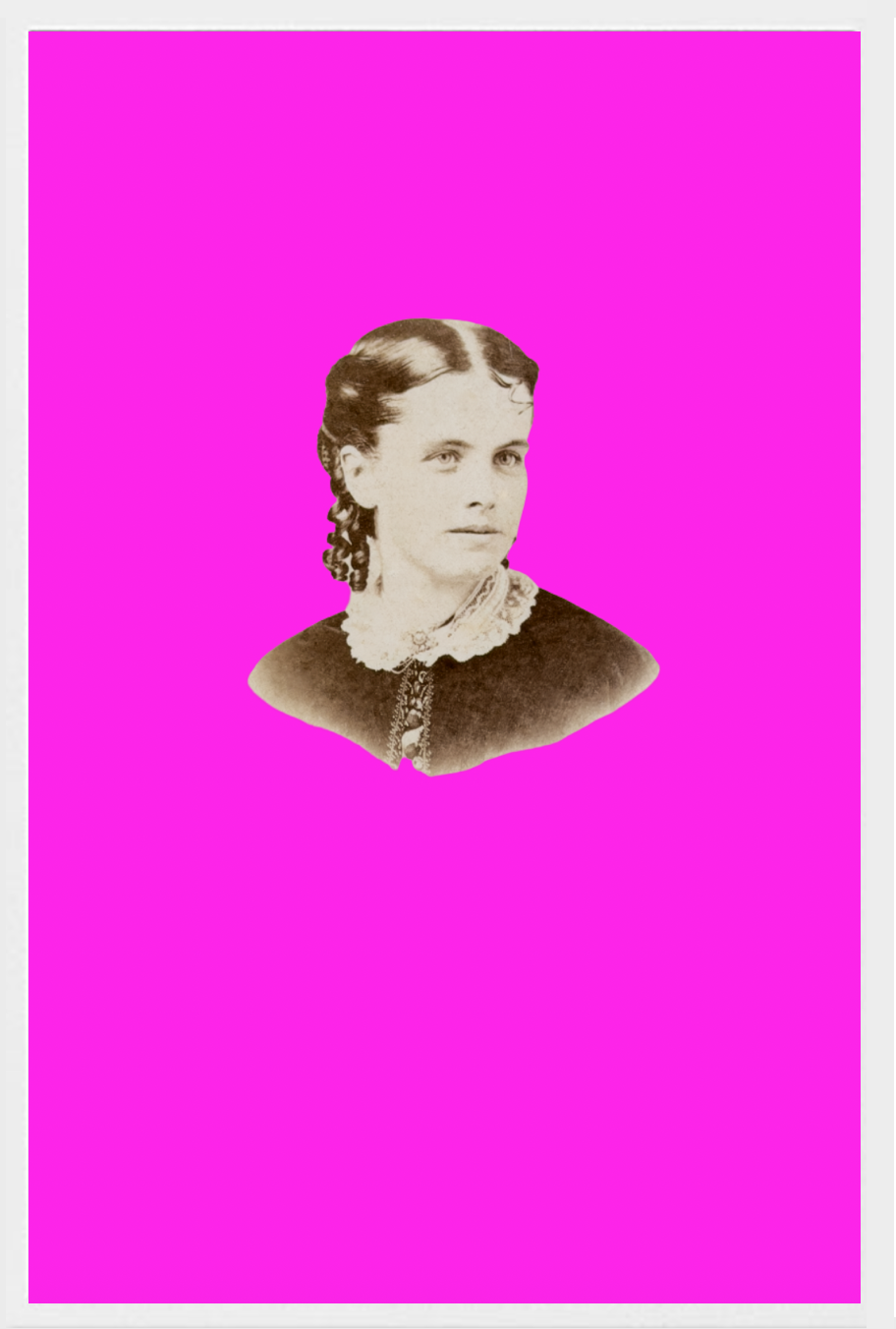
Popular from the 1860s onward, the Carte de visite, is a small paper photograph mounted on thicker cardboard and sepia-toned, a common characteristic of photographs from this period.
While the concept and conveyance of beauty was through a much more conservative lens in the 1800s, the aura and presence of this young girl, are a time traveling reflection of contemporary beauty. This was an extraordinary achievement, an incredibly rare occasion, and with bold interpretation, she transcends time and place, at once at home in the modern world.
Image Order: Framed, Insitu, Original, Verso
Original Photograph
Photographer: Unknown
Location: Madison, WIS.
Captured: Unknown
Size: 2 3/8” x 3 7/8”
Printed on: Carte-de-visite
Camera: Unknown
Verso: E.R CURTISS, PHOTOGRAPHER, Madison, WIS. Negatives preserved.
Presentation: Custom Folder shipped separately
Contemporary Photograph
Size: 40” x 60”
Positioning: top 1/2
Border: Bleed
Paper: Hahnemühle 100% Photo Rag Baryta | Pure Cotton | 315 gsm
Moulding: Solid Wood Museum Shadowbox
Frame Face: 3/4”
Frame Color: White
Glazing: UV Acrylic
Presentation: Portrait
Authentication
Verisart COA
21 Founders | Initials embedded
Conversation? We’re Human.
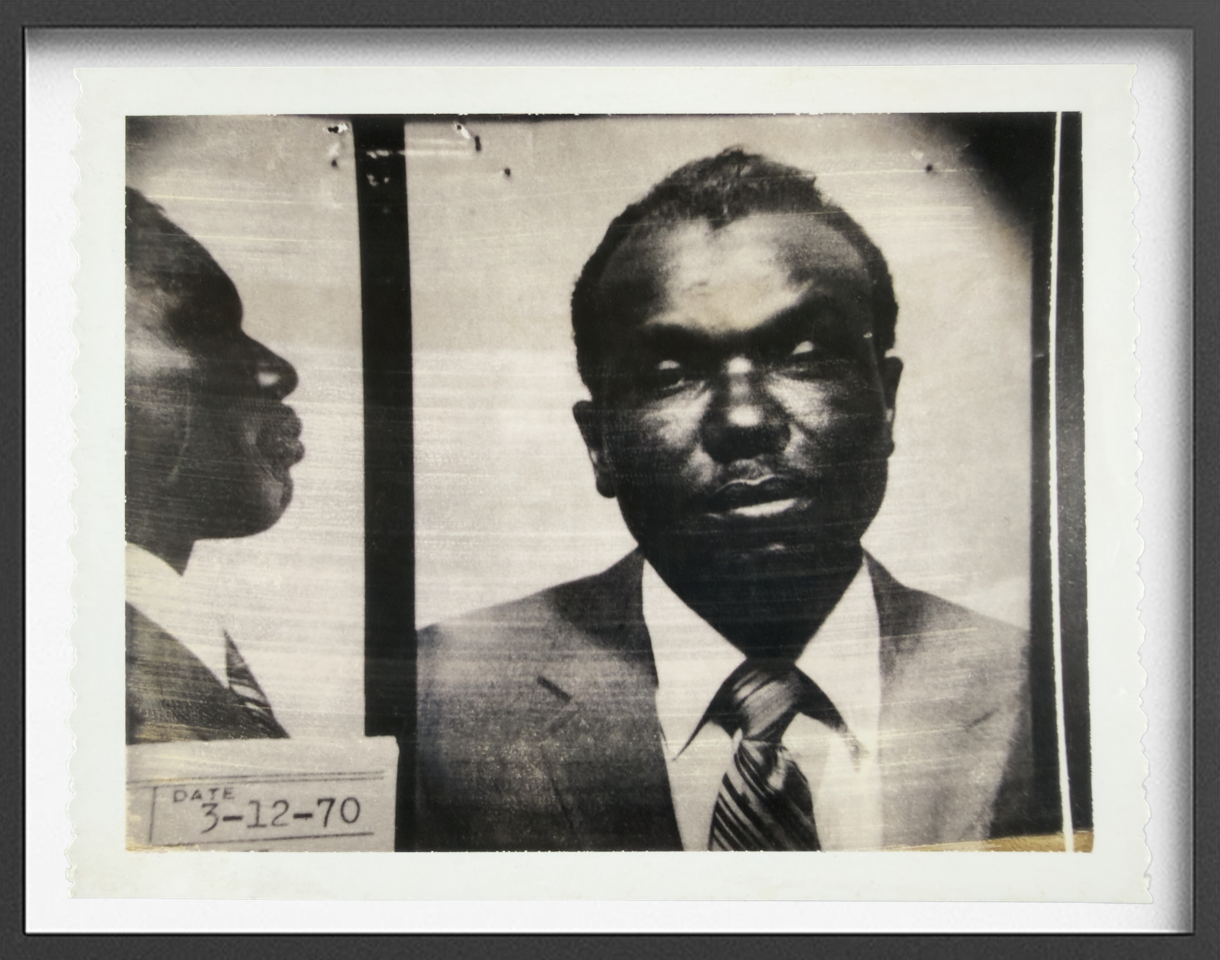
In spring 1970, the tension between Black Philadelphians and the police was a continuum of conflict rooted in police brutality and biased enforcement.
The aggressive “law and order” approach of Police Commissioner Frank Rizzo, sparked ongoing activism by groups like the Black Panther Party and other Black Power organizers pushing back against systemic discrimination — a push that met with heavy policing throughout 1970 and beyond.
By March 1970, racial tension shaped by years of unequal treatment and confrontational policing, caught Mr. Harris in the crosshairs. Guilty or not, black was black and ambiguity was the tool. A context that remains today. While we’ll never know if Mr. Harris was indeed a thief, or one of countless black victims caught in a system of prejudice and injustice. This is the sad and voiceless face of discrimination and defeat. The face of another color.
Image Order: Framed, Insitu, Original, Verso
Original Photograph
Photographer: Unknown (Philadelphia Police Department)
Location: Philadelphia, PA
Captured: March 12, 1970
Size: 3 1/4” x 4 1/8”
Printed on: Polaroid
Camera: Unknown
Verso: Mugshot detail
Presentation: Custom box shipped separately
Contemporary Photograph
Size: 30” x 38”
Positioning: Centered
Border: 2”
Paper: Hahnemühle 100% Photo Rag Baryta | Pure Cotton | 315 gsm
Moulding: Solid Wood Museum Shadowbox
Frame Face: 3/4”
Frame Color: Black
Glazing: UV Acrylic
Presentation: Landscape
Authentication
Verisart COA
21 Founders | Initials embedded
Conversation? We’re Human.
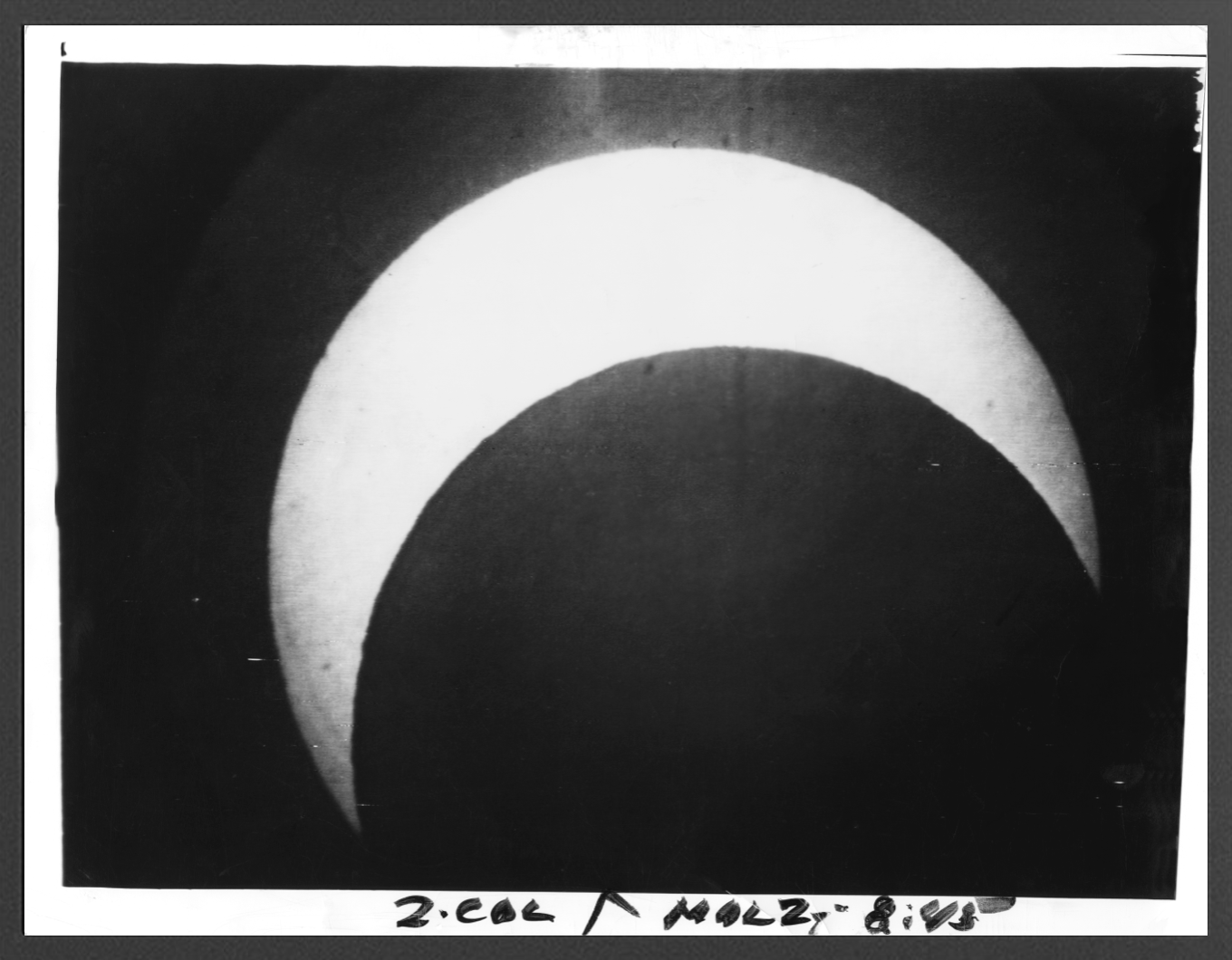
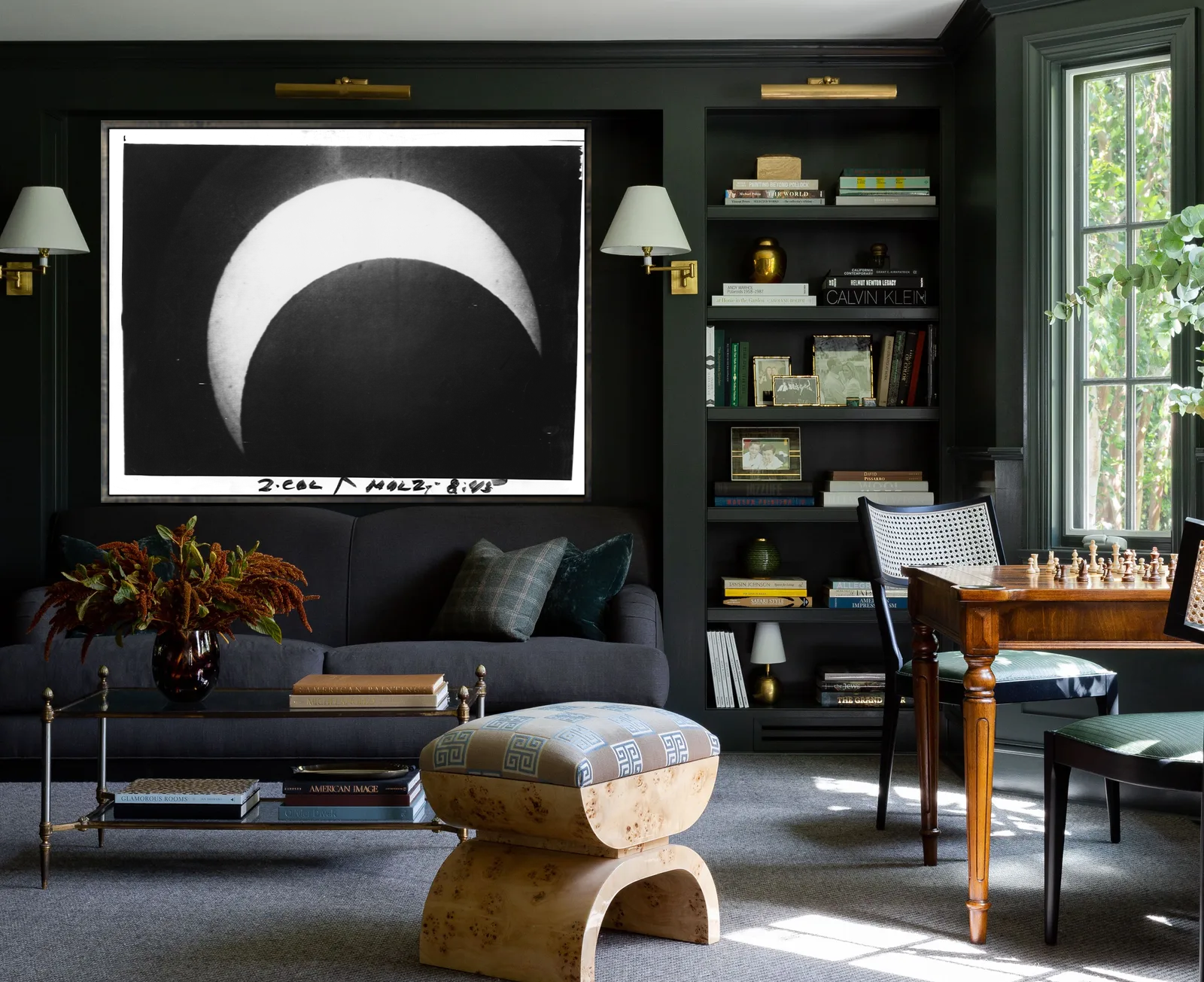
Ground-based photographs of the April 7, 1940 solar eclipse exist, but no verified historical record from studies or scientific archives, exist of a photograph taken from an airliner. If such an image exists in a private collection or newspaper clipping, it has not been made public. This rare capture, predates the emergence of 1960s minimalist art that rejected emotional expressionism for "literal" art, characterized by simple geometric shapes, industrial materials, and repetitive structures. In Non-hierarchical composition, the parts of the artwork are often equal, lacking a central focal point—explored and interpreted by the likes of Donald Judd, Sol LeWitt and Elsworth Kelly, whose works emphasized space and form. Here, two celestial bodies become the quintessential natural representation of positive and negative space.
Image Order: Framed, Insitu, Original, Verso
Original Photograph
Photographer: Unknown
Location: Jacksonville, FL
Captured: April 7, 1940
Size: 8” x 10 1/4” (top) 10” (bottom)
Printed on: Unknown
Camera: Unknown
Verso: Sun Eclipse taken from airliner near Jacksonville, Fla. 4-7-1940
Presentation: Custom box shipped separately
Contemporary Photograph
Size: 60” x 78”
Positioning: Centered
Border: 3” (Right border added)
Paper: Hahnemühle100% Photo Rag Baryta | Pure Cotton | 315 gsm
Moulding: Solid Wood Museum Shadowbox
Frame Face: 3/4”
Frame Color: Black
Glazing: Archival Laminate (no acrylic)
Presentation: Portrait or Landscape
Authentication
Verisart COA
21 Founders | Initials embedded
Conversation? We’re Human.
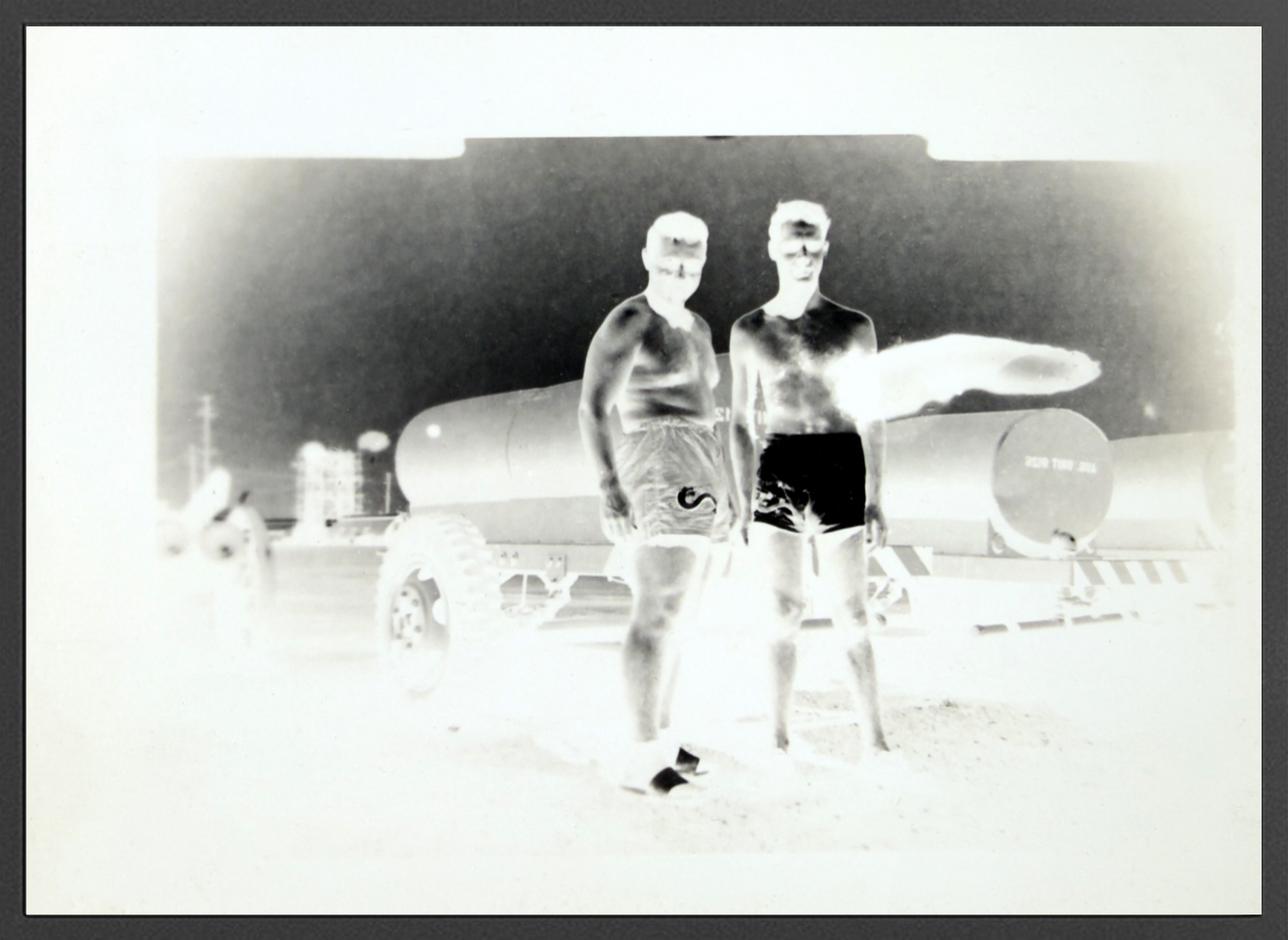
Sometimes the essence of a photograph is found in the negative. By all measures, it appears this image was taken at a military installation, two brothers in arms wearing unit shorts displaying the snake, the iconic symbol of American identity and readiness. Interesting however that the flair anomaly is concentrated on the man in black—crotch flair and pit missile. This image appears as a negative due to a mid-century duplication or printing anomaly, where tonal values were never fully corrected—leaving light and shadow reversed. The result is an unintentional and powerful transformation, the photograph shifts to both documentation and abstraction.
Image Order: Framed, Insitu, Original, Verso
Original Photograph
Photographer: Unknown
Location: Unknown
Captured: Unknown
Size: 2 3/4” x 3 3/4”
Printed on: Unknown
Camera: Unknown
Verso: NA
Presentation: Custom box shipped separately
Contemporary Photograph
Size: 40” x 58”
Positioning: Centered
Border: 2”
Paper: Paper: Hahnemühle 100% Photo Rag Baryta | Pure Cotton | 315 gsm
Moulding: Solid Wood Museum Shadowbox
Frame Face: 3/4”
Frame Color: Black
Glazing: UV Acrylic
Presentation: Landscape
Authentication
Verisart COA
21 Founders | Initials embedded
Conversation? We’re Human.
Our portfolio is organic and will ebb and flow as images move us.
Any questions? Happy to help
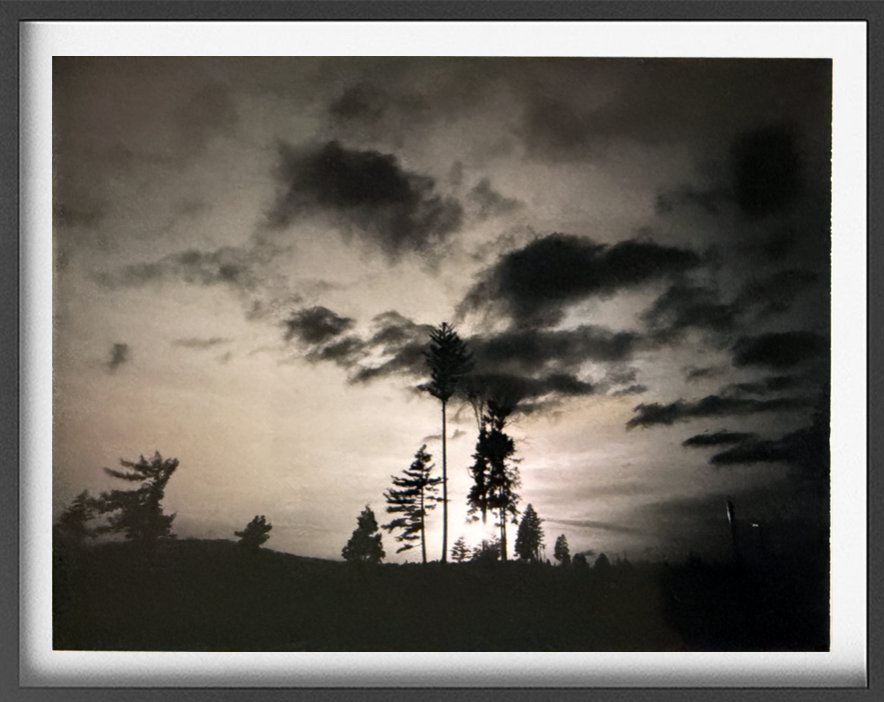
The waning hours of day, the convergence of light, atmosphere, and vantage point deliver a visual paradox: a solid form seemingly penetrated by an immaterial force and collapsing the boundary between the physical and the ephemeral. A rag-tag collective of pines, sentry’s on a hill top of shape and size, Although "tree" is a common word, there is no universally recognised precise definition of what a tree is, either botanically of in common language. In its broadest sense, a tree is any plant with the general form of an elongated stem, or trunk, which supports the photosynthetic leaves or branches at some distance above the ground. Here, the more robust of the group, appears to have obtained lift off.
Image Order: Framed, Insitu, Original, Verso
Original Photograph
Photographer: Unknown
Location: Unknown
Captured: Unknown
Size: 3 3/4” x 4 1/4”
Printed on: Unknown
Camera: Unknown
Verso: NA
Presentation: Custom box shipped separately
Contemporary Photograph
Size: 40” x 50”
Positioning: Centered
Border: 2”
Paper: Paper: Hahnemühle 100% Photo Rag Baryta | Pure Cotton | 315 gsm
Moulding: Solid Wood Museum Shadowbox
Frame Face: 3/4”
Frame Color: Black
Glazing: UV Acrylic
Presentation: Landscape
Authentication
Verisart COA
21 Founders | Initials embedded
Conversation? We’re Human.
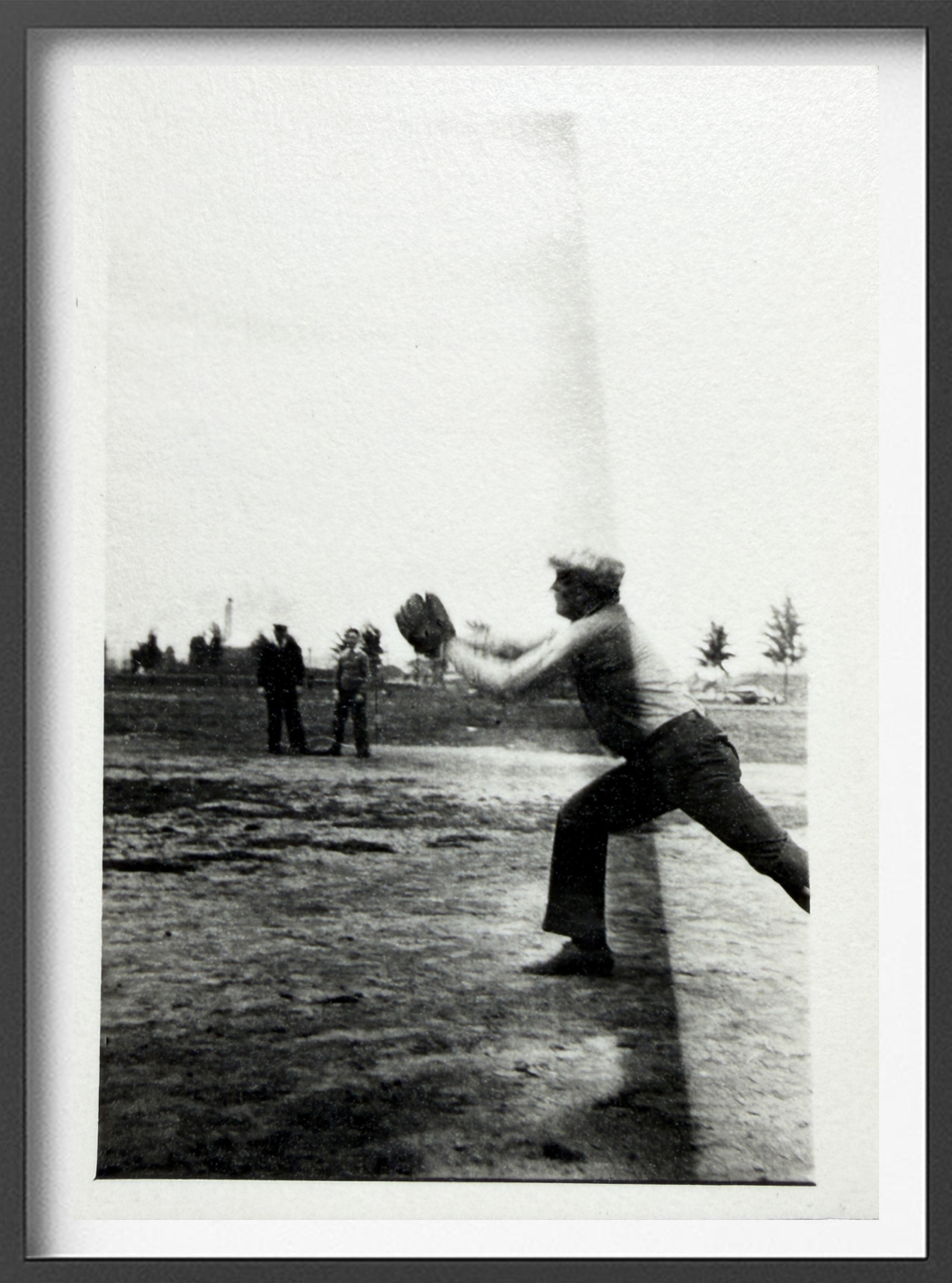
Sandlot and neighborhood baseball was the defining recreational institution of mid-20th century American life. Every neighborhood had a vacant lot that organically became a gathering place and baseball was overwhelmingly the dominant sport in American culture during this period, called "the national pastime" with genuine sincerity. The games were intergenerational, everyone played together—a social infrastructure as it were, in ways we've largely lost, building community bonds across economic lines. The fact that someone brought a camera to this informal game is itself significant. Film and processing weren't cheap. This suggests the moment felt worth preserving — either the player was particularly good, this was a recurring beloved tradition, or someone simply wanted to capture ordinary joy. That impulse makes it a quietly moving document of everyday American life.
Image Order: Framed, Insitu, Original, Verso
Original Photograph
Photographer: Unknown
Location: Unknown
Captured: Unknown
Size: 2 1/2” x 3 1/2
Printed on: Unknown
Camera: Unknown
Verso: NA
Presentation: Custom Folder shipped separately
Contemporary Photograph
Size: 30” x 43”
Positioning: Centered
Border: 2”
Paper: Paper: Hahnemühle 100% Photo Rag Baryta | Pure Cotton | 315 gsm
Moulding: Solid Wood Museum Shadowbox
Frame Face: 3/4”
Frame Color: Black
Glazing: UV Acrylic
Presentation: Portrait
Authentication
Verisart COA
21 Founders | Initials embedded
Conversation? We’re Human.
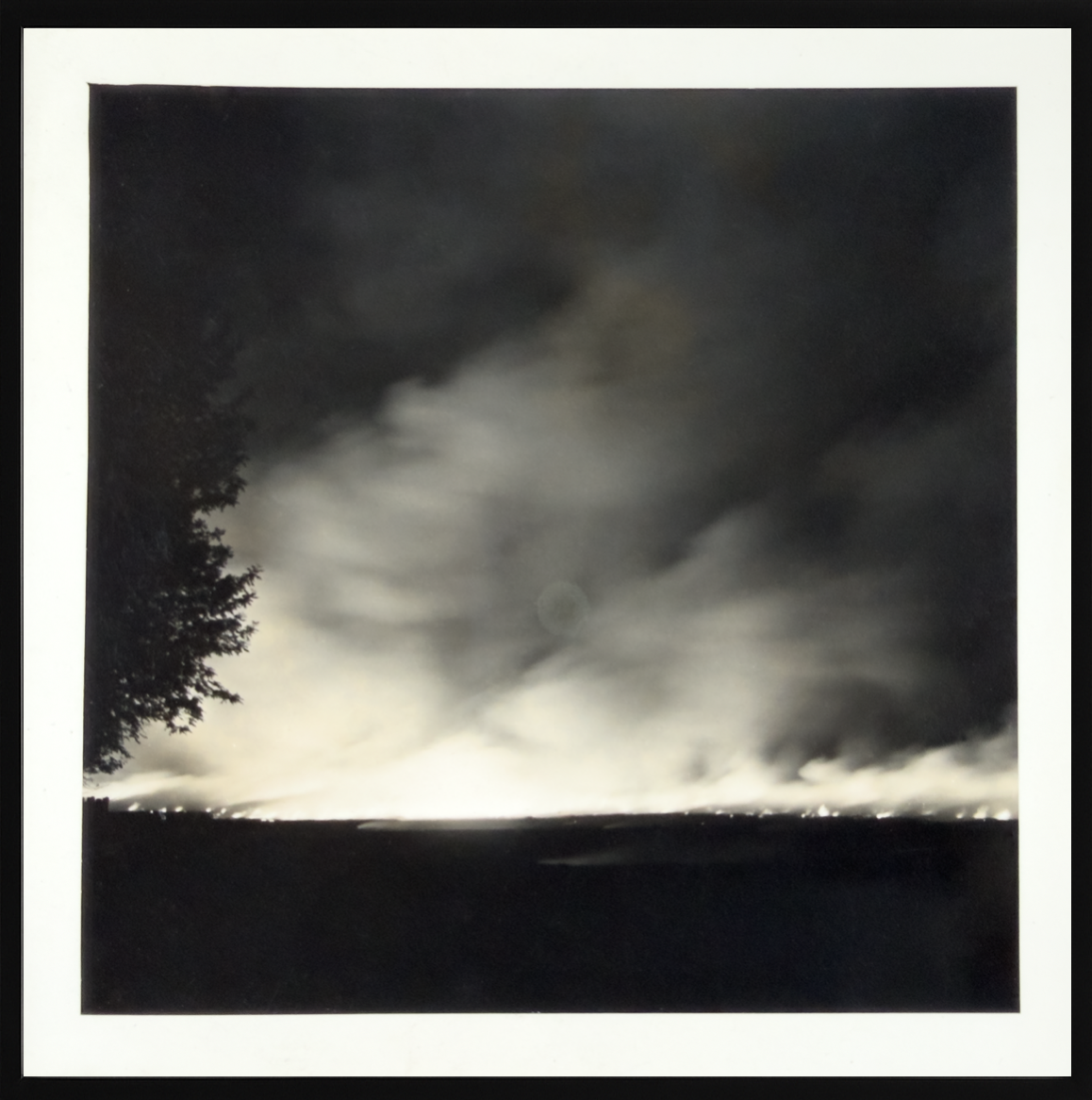
Believed by many, to be spirits of energy, the Orb in a literal sense, describes round objects like the sun or moon, celestial bodies, or ceremonial symbols of power. Here, in the center of a brewing storm, lens flare or atmospheric anomaly, ambiguity is the most arresting and enigmatic element of this photograph. Suspension in a turbulent cloudscape. Mystery or spirit of energy in the eyes of the viewer.
Image Order: Framed, Insitu, Original, Verso
Original Photograph
Photographer: Unknown
Location: Unknown
Captured: Unknown
Size: 4” x 4”
Printed on: Unknown
Camera: Unknown
Verso: NA
Presentation: Custom box shipped separately
Contemporary Photograph
Size: 60” x 60”
Positioning: Centered
Border: 2”
Paper: Hahnemühle 100% Photo Rag Baryta | Pure Cotton | 315 gsm
Moulding: Solid Wood Museum Shadowbox
Frame Face: 3/4”
Frame Color: Black
Glazing: UV Acrylic
Presentation: Landscape
Authentication
Verisart COA
21 Founders | Initials embedded
Conversation? We’re Human.
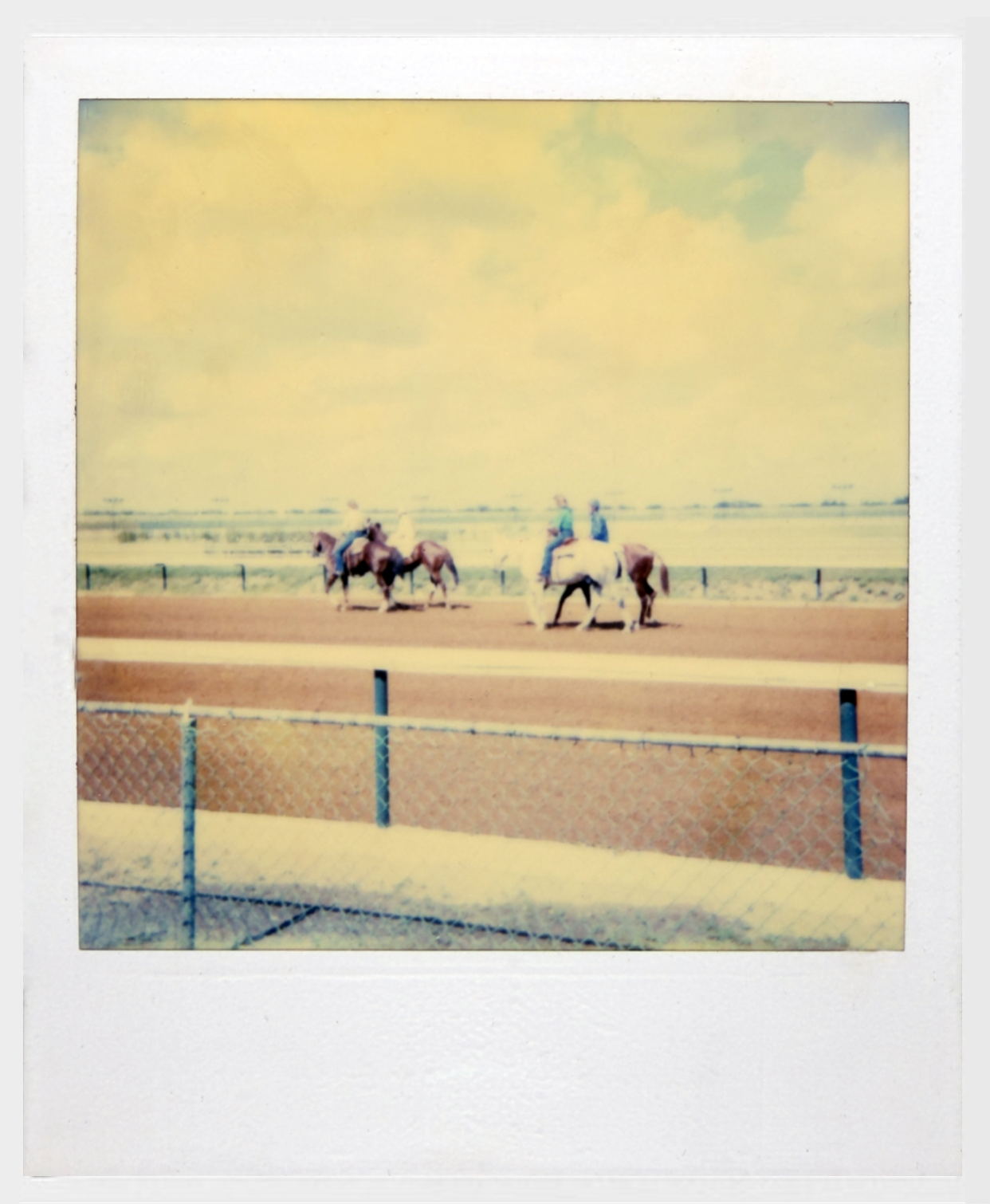
The “linear grid significance” was made famous by Andreas Gursky's photograph Rhein II and refers to the artwork's striking composition, dominated by a strict, minimalist arrangement of horizontal stripes. What makes Rhein II (sold for $4.3M) groundbreaking however, is Gursky’s pioneering of the “fictitious" landscape—digitally removing buildings and walkers from the scene to achieve a pristine, conceptualized image. To the contrary, the significance of this photograph is the balanced composition between stark horizontal line patterns and the equestrians, and the fact that it was shot on Polaroid, an instant, physical photograph that cannot be manipulated.
Consider the “linear grid” similarity with Untitled (Tennis), the unknown intention of subject matter and the interesting contrast in presenting them together.
Image Order: Framed, Insitu, Original, Verso
Original Photograph
Photographer: Unknown
Location: Unknown
Captured: Unknown
Size: 3 1/2” x 4 1/4”
Printed on: Polaroid
Camera: Polaroid
Verso: 11408120697 | POLAROID 2
Presentation: Custom box shipped separately
Contemporary Photograph
Size: 40” x 48”
Positioning: Centered
Border: 2”
Paper: Hahnemühle100% Photo Rag Baryta | Pure Cotton | 315 gsm
Moulding: Solid Wood Museum Shadowbox
Frame Face: 3/4”
Frame Color: White
Glazing: UV Acrylic
Presentation: Portrait
Authentication
Verisart COA
21 Founders | Initials embedded
Conversation? We’re Human.
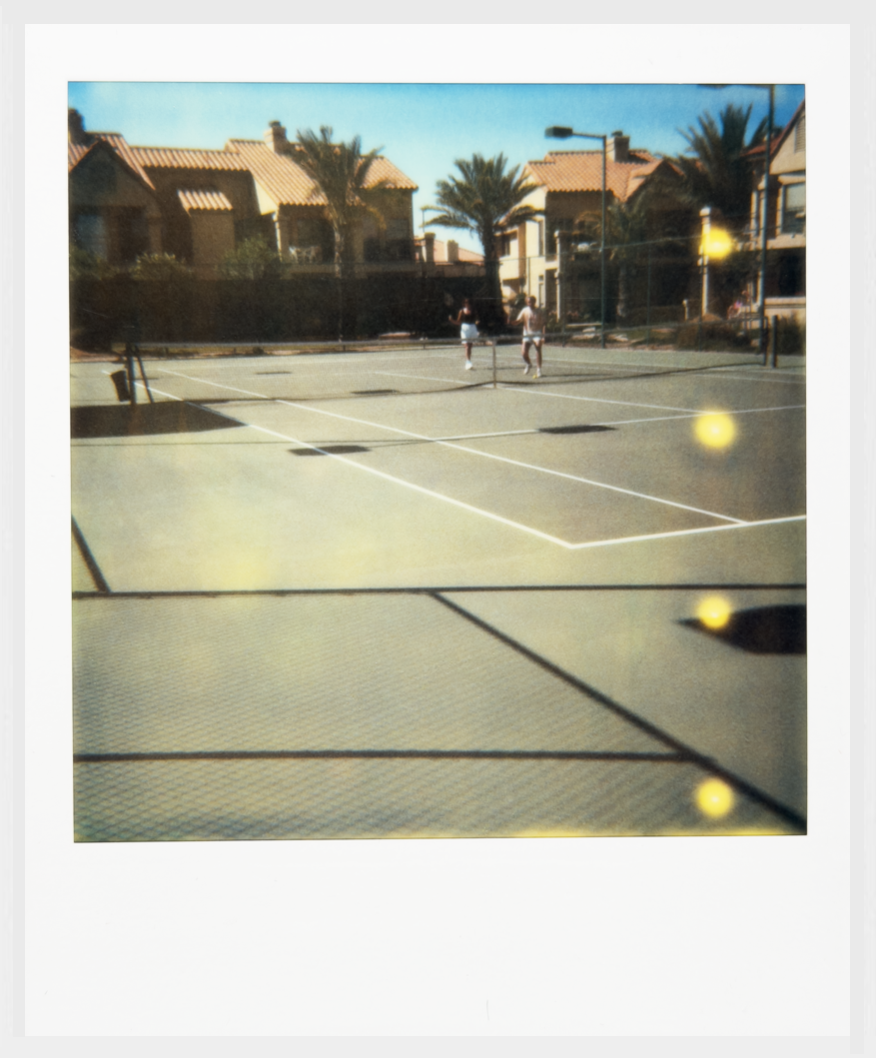
The International Tennis Federation (ITF) officially introduced yellow tennis balls in 1972 to improve visibility for television viewers. While adopted by most tournaments, traditionalists at Wimbledon continued to use white balls until 1986. This photograph delivers all the geometric elements that elevate it from a seemingly simple shot to one of varying complexity— forming an interesting relationship between the shadows of the chain link fence and overhead lights to the court lines and “tennis ball” pressure fractals, unique to Polaroid film processing. The photographer may have been simply capturing players on the court, or actually capturing the patterns formed. Add the “tennis balls” and you have one hell of a shot! Match point!
Consider the “linear grid” similarity with Untitled (Track), the unknown intention of subject matter and the interesting contrast in presenting them together.
Image Order: Framed, Insitu, Original, Verso
Original Photograph
Photographer: Unknown
Location: Unknown
Captured: Unknown
Size: 3 1/2” x 4 1/4”
Printed on: Polaroid
Camera: Polaroid
Verso: 12520123701 | POLAROID 9
Presentation: Custom box shipped separately
Contemporary Photograph
Size: 40” x 48”
Positioning: The iconic bottom border is distinctly Polaroid
Border: 2”
Paper: Hahnemühle100% Photo Rag Baryta | Pure Cotton | 315 gsm
Moulding: Solid Wood Museum Shadowbox
Frame Face: 3/4”
Frame Color: White
Glazing: UV Acrylic
Presentation: Portrait
Authentication
Verisart COA
21 Founders | Initials embedded
Conversation? We’re Human.
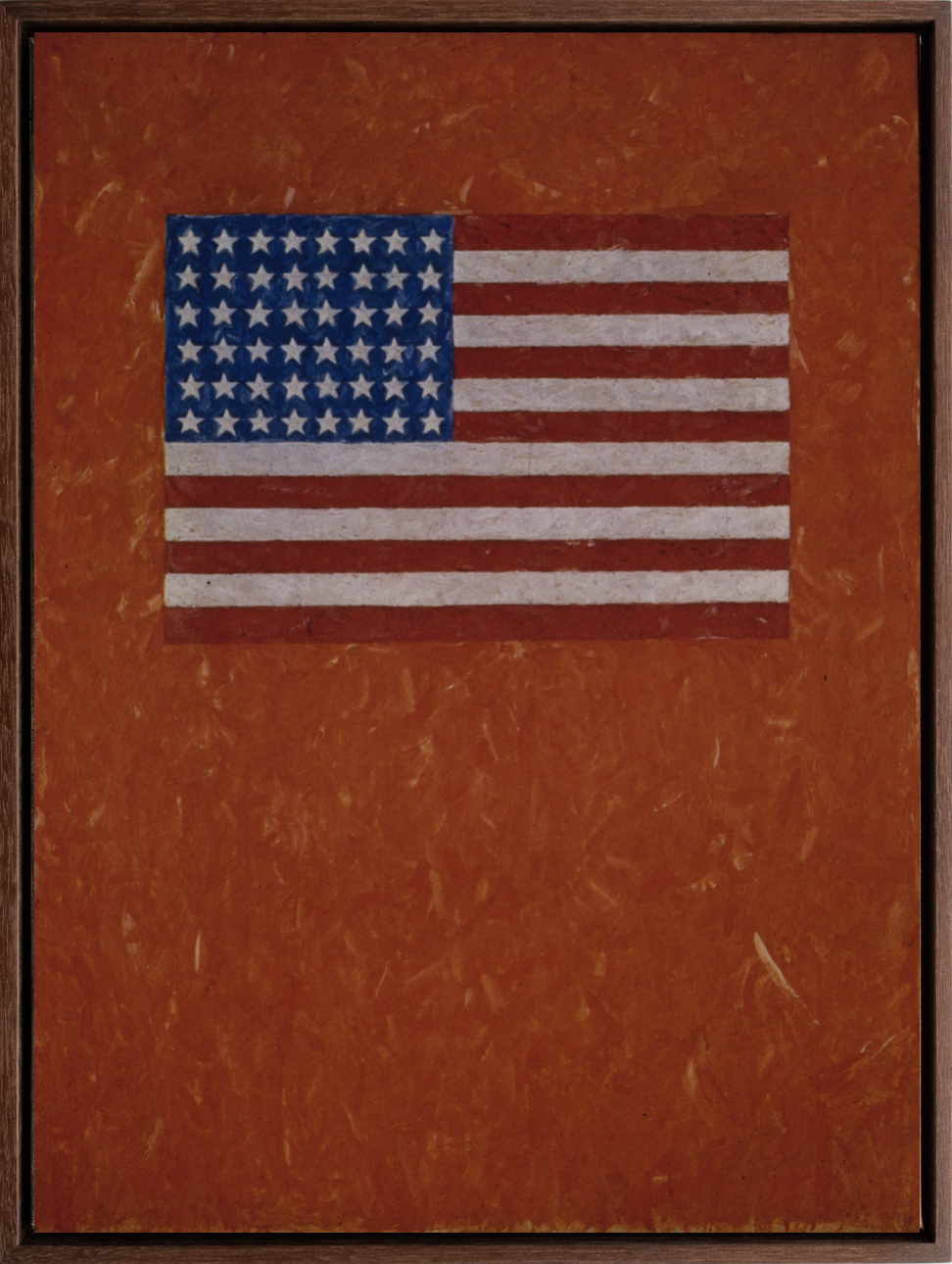
In her essay Jasper Johns, for the November 1963 (Vol. VII, No. 9) issue of Art International, critic Barbara Rose writes, “Between the early and later works lie a number of transitional paintings…Perhaps the most important of these is Flag on Orange Field.” Born May 15, 1930, Johns is an American painter, sculptor, draftsman, and printmaker. Considered a central figure in the development of American postwar art, he has been variously associated with abstract expressionism, Neo-Dada, and pop art movements. The typed label is typical of mid-century university and museum cataloging, while the handwritten FU-RH is highly indicative of Freie Universität Berlin followed by professors initials. This slide documents the original oil on canvas painting, that measures 124.5 × 167.6cm and is in the collection of the Museum Ludwig, Cologne, Germany.
The reassertion, printed at the same size as the original, is extremely rare, as no known example exists at this size.
Image Order: Framed, Insitu, Original, Verso
Original Photograph
Photographer: Unknown
Location: Unknown
Captured: Unknown
Size: 2” x 2”
Printed on: Unknown
Camera: Unknown
Verso: GEPE Made in Sweden
Presentation: Custom box shipped separately
Contemporary Photograph
Size: 49” x 66”
Positioning: Centered
Border: Original
Paper: Hahnemühle 100% Photo Rag Baryta | Pure Cotton | 315 gsm
Moulding: Solid Wood Museum Floater
Frame Face: 3/4”
Frame Color: Dark Walnut
Glazing: Archival Laminate
Presentation: Portrait
Authentication
Verisart COA
21 Founders | Initials embedded